Bridge concern
Saddle Nose Correction in Gangnam, Seoul
the bridge, rebuilt to last.
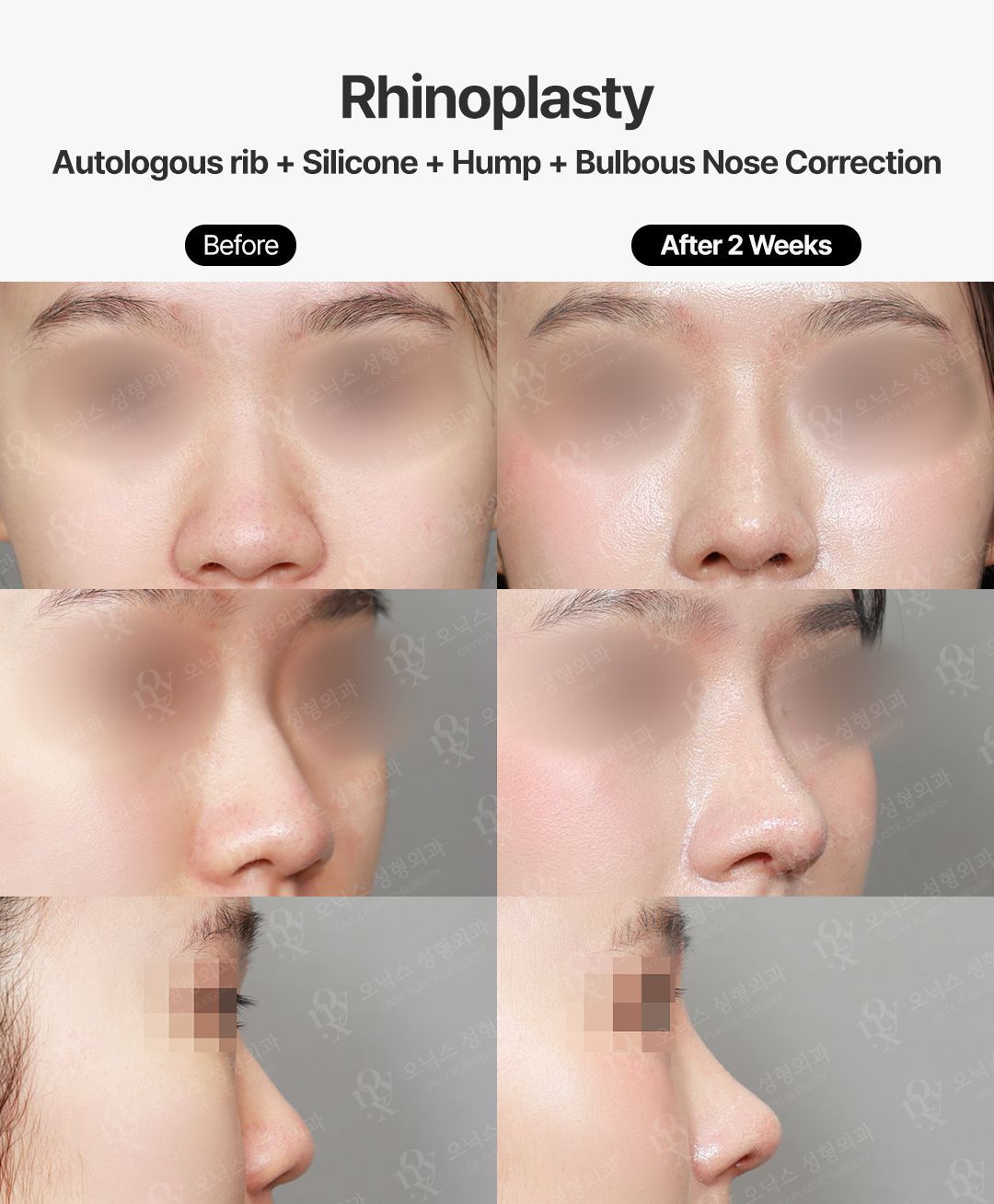
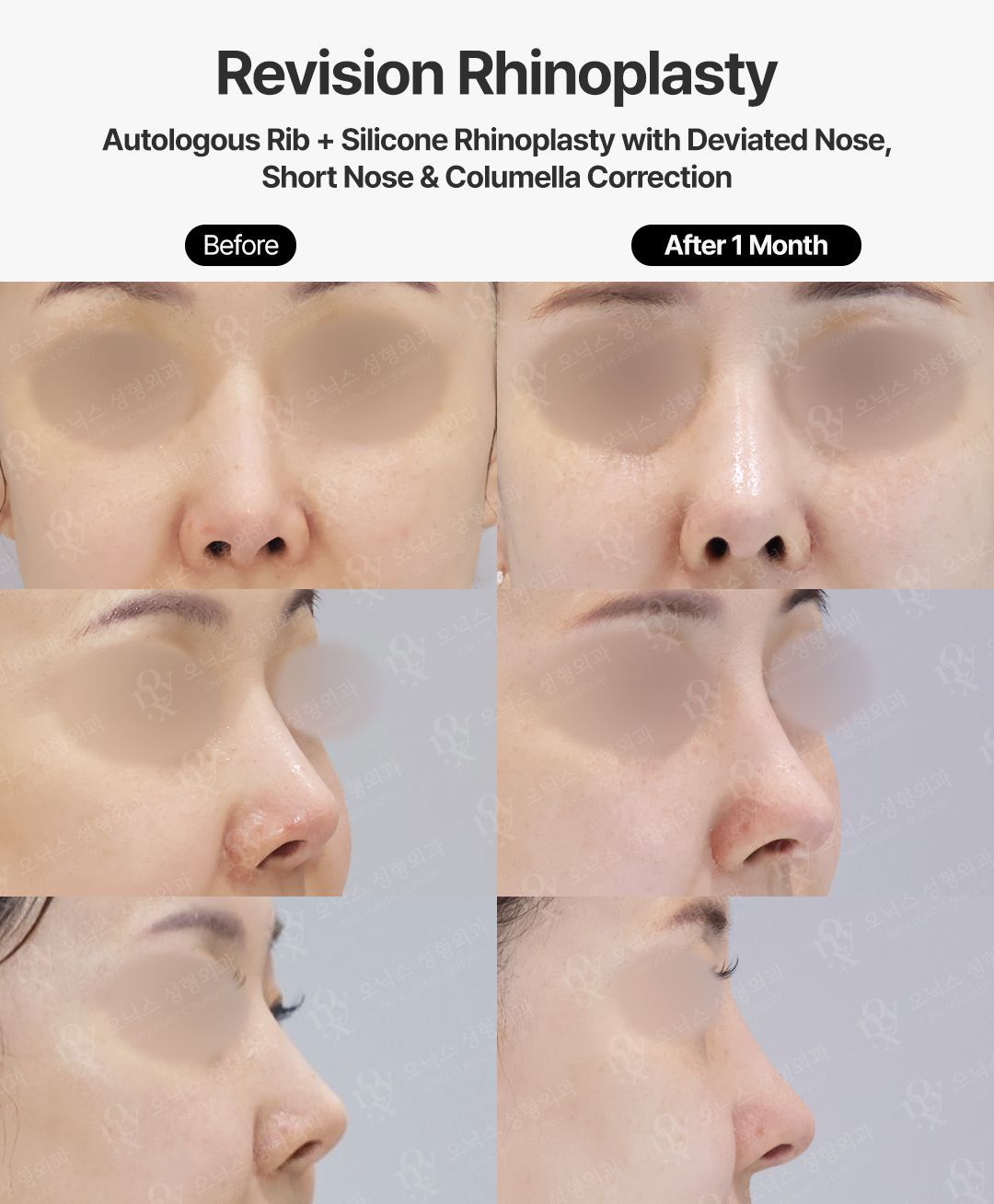
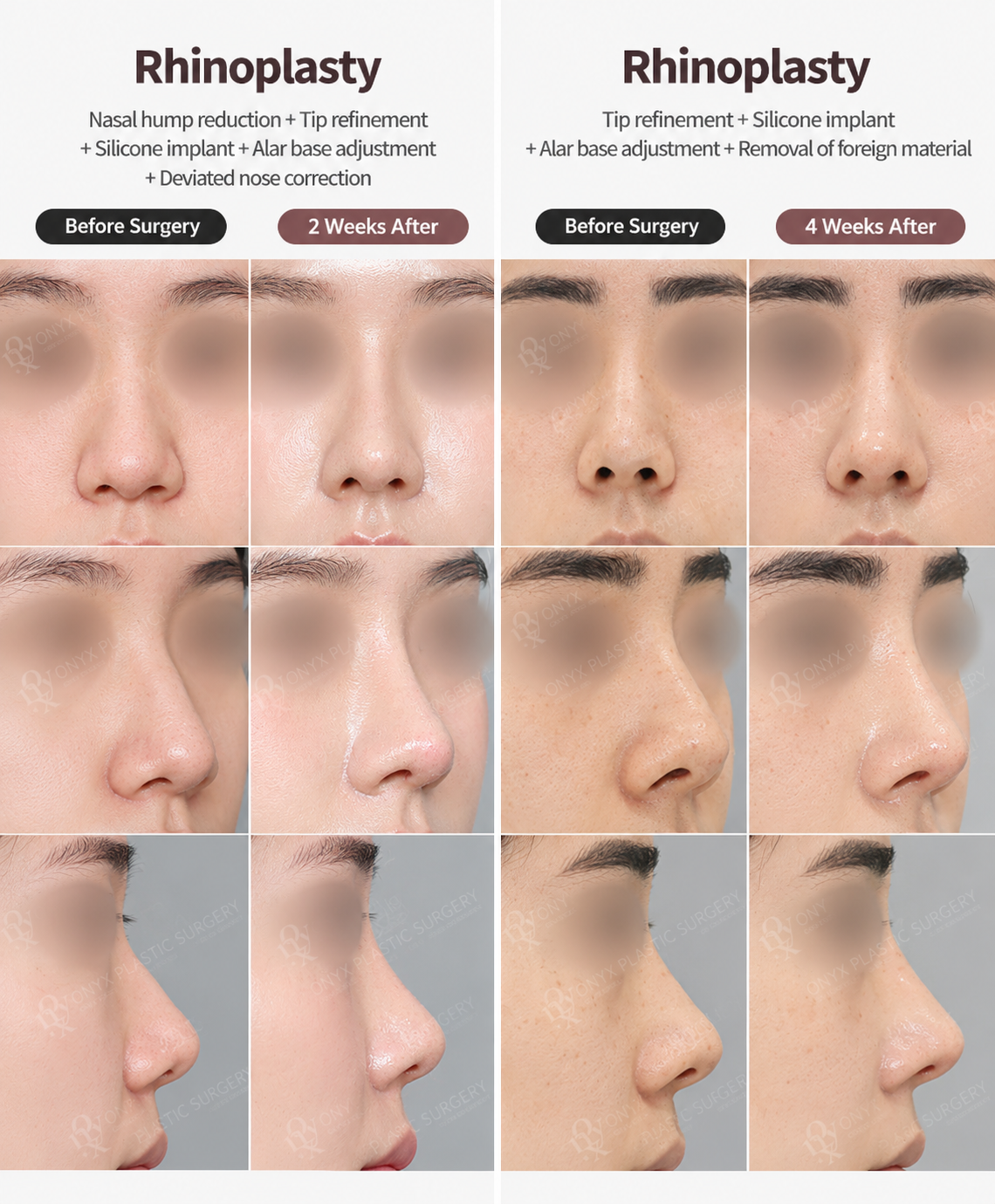
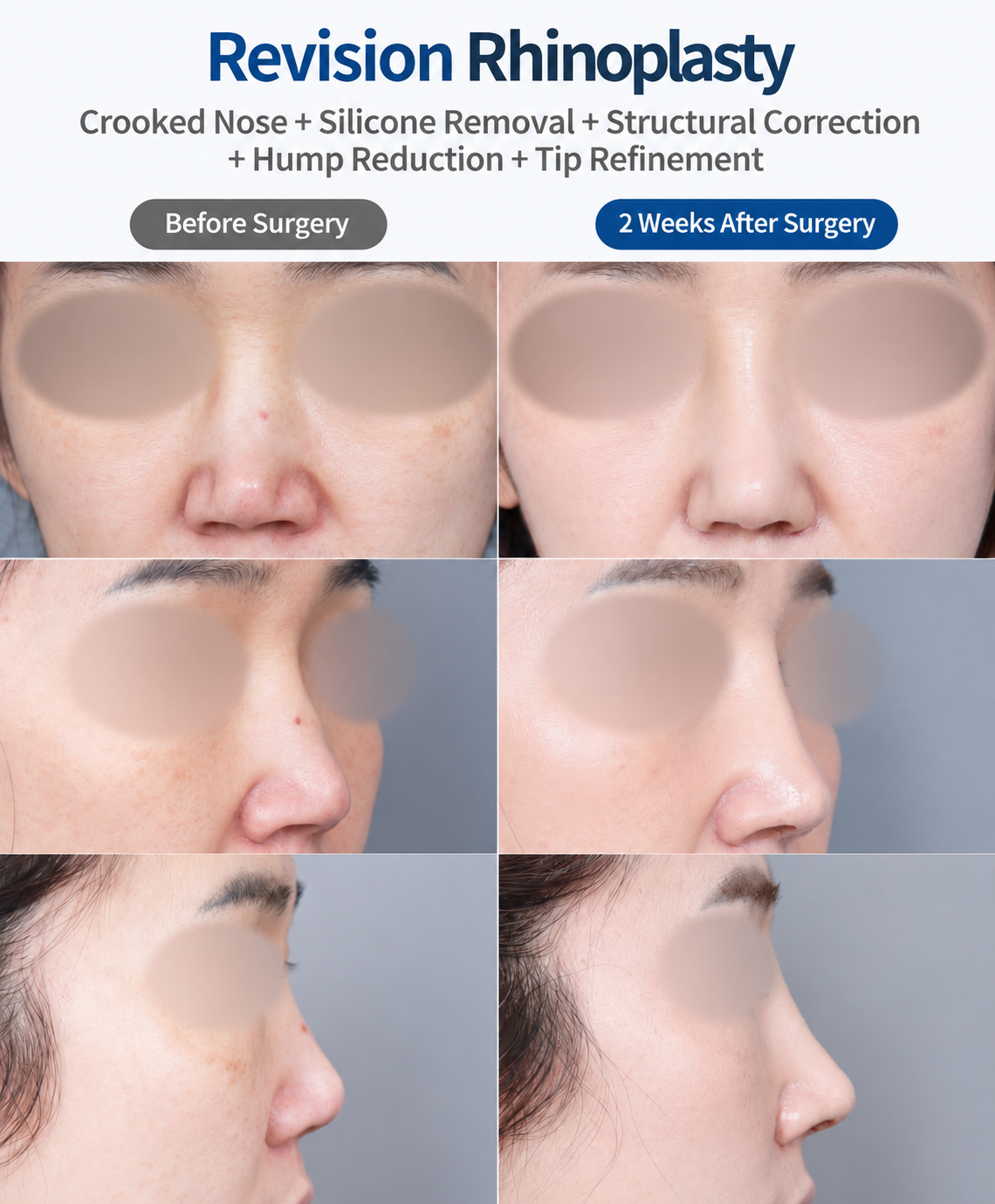
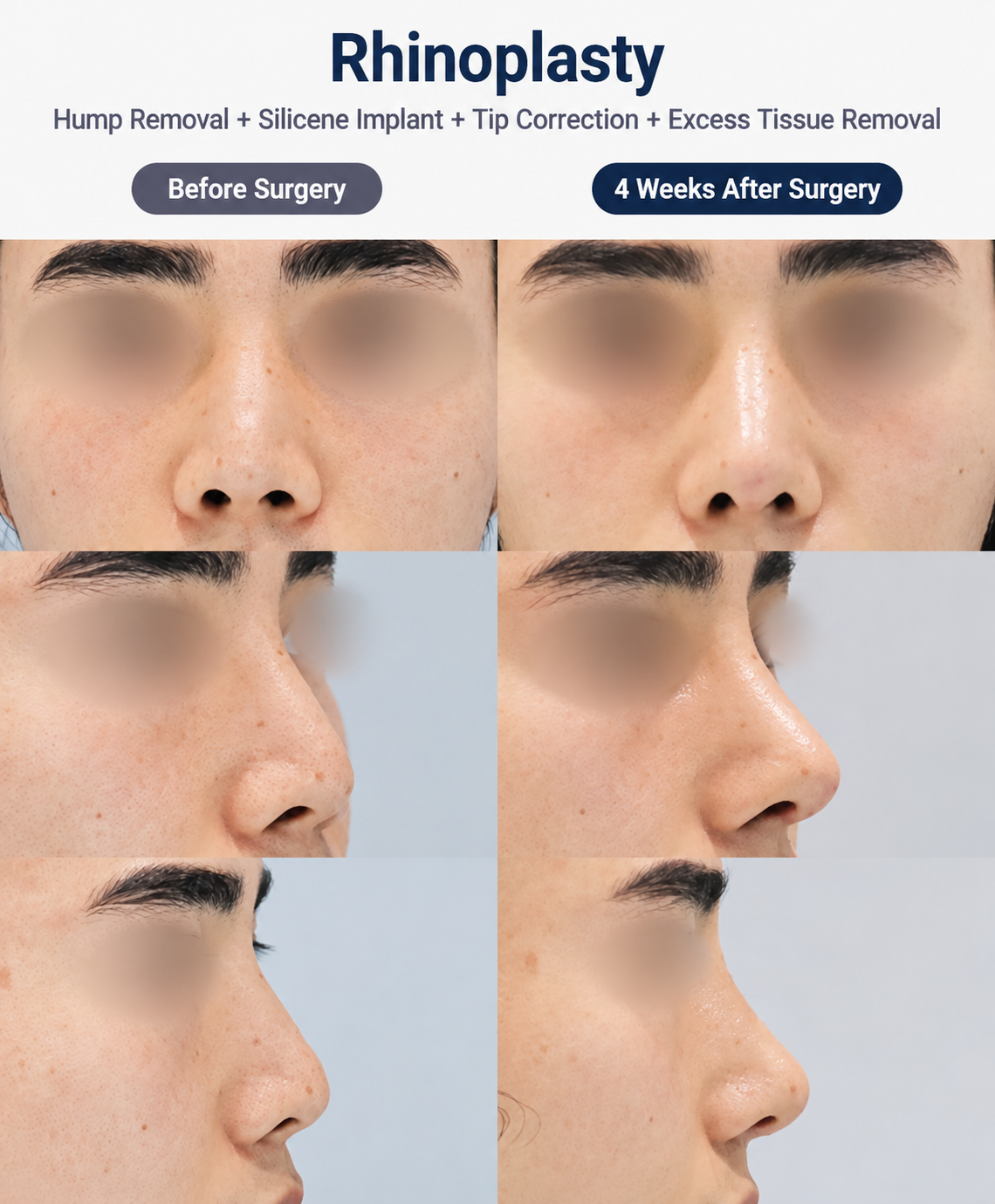
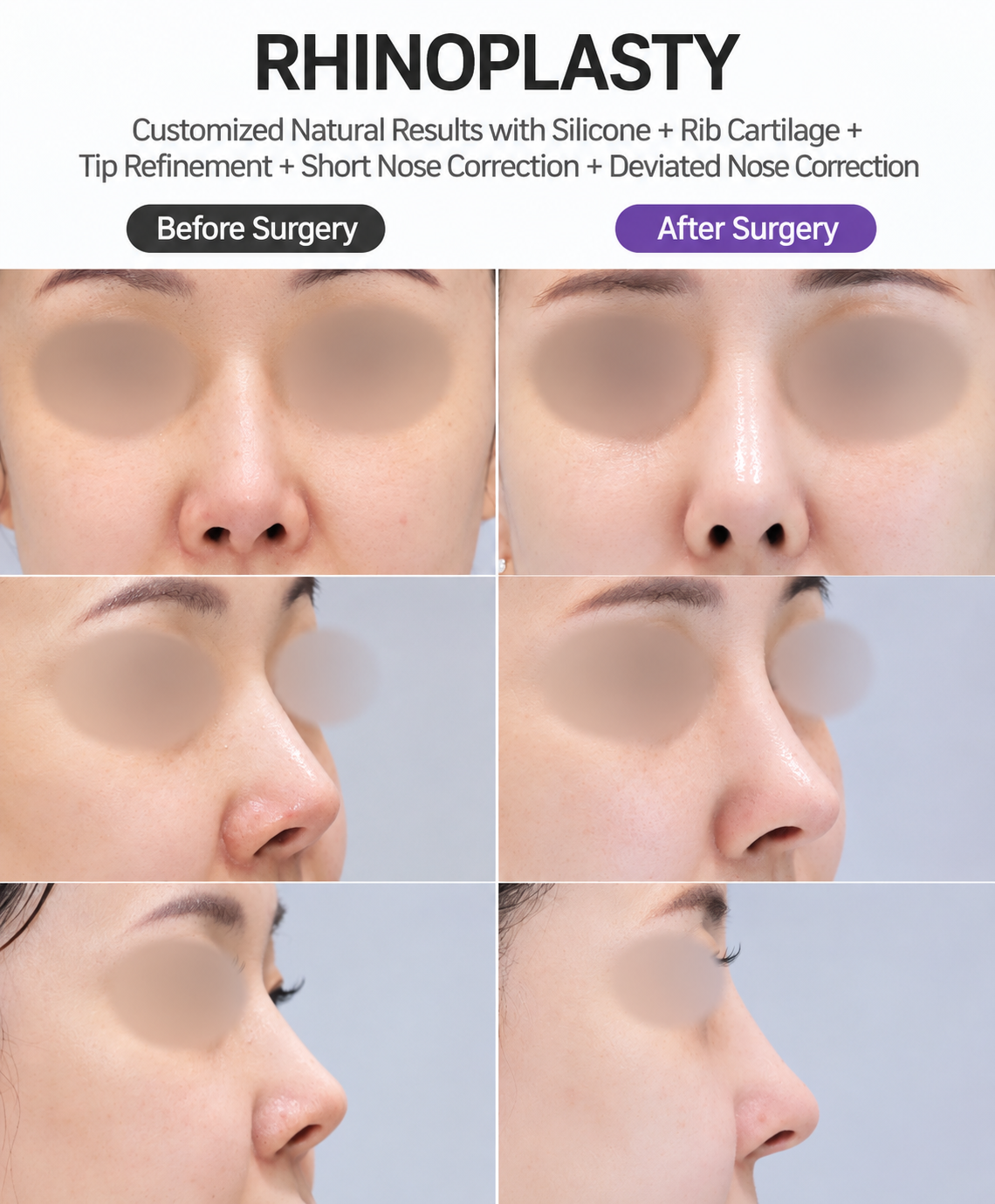
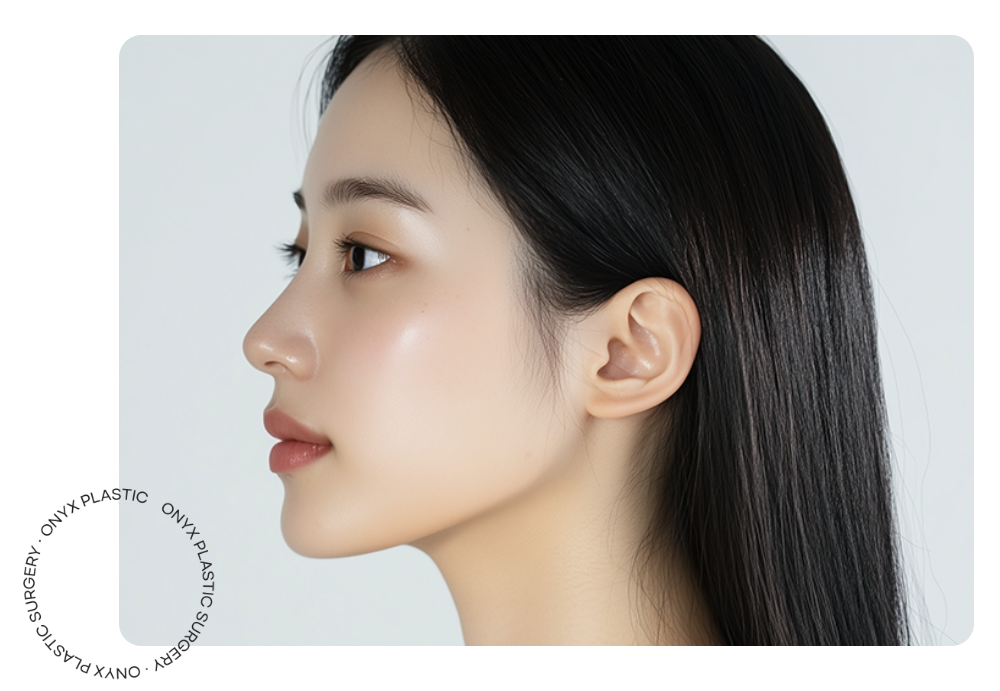
A saddle nose has a dip or collapse in the middle of the bridge, so the profile looks scooped and the tip may seem upturned. At ONYX in Gangnam, Seoul, Dr. Yoo rebuilds the missing support with your own cartilage, often rib cartilage, so the bridge is straight and stable again.
- 01 1:1 consultation with the operating surgeon
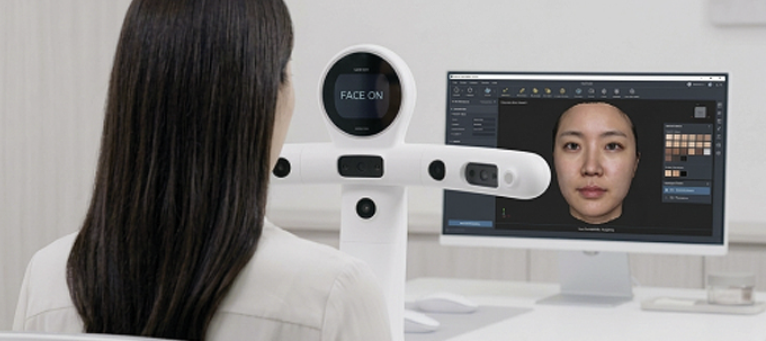
- 02 3D CT scan & virtual simulation before surgery
- 03 Structure-first design with your own cartilage
- 04 English-friendly support via WhatsApp
What is a saddle nose?
A saddle nose is a depression of the nasal bridge caused by loss of support from the septum or nasal bones. Common causes are injury, previous septal or nasal surgery, infection, or some medical conditions.
Correction rebuilds the framework rather than only filling the dip: the septum is reconstructed and the bridge restored with cartilage, most often rib cartilage for strength.
| Surgery time | About 3–4 hours |
|---|---|
| Anaesthesia | General anaesthesia |
| Approach | Usually open |
| Grafts | Septal, ear or rib cartilage |
| Stay in Seoul | About 7–10 days, sometimes longer |
| Final result | About 12 months |
Signs you may relate to
- There is a visible dip in the middle of your bridge
- Your nose looks scooped or flattened from the side
- The tip seems to point upward more than before
- The change happened after injury or surgery
- Breathing through the nose feels harder
If a medical condition may have caused the collapse, Dr. Yoo may ask for tests or records before surgery so the plan is safe.
Common causes
- Injury A blow to the nose can fracture or collapse the septum.
- Previous surgery Too much septum removed during septoplasty or rhinoplasty weakens support.
- Infection A septal abscess or hematoma can destroy cartilage.
- Medical causes Some inflammatory conditions or drug use can damage the septum.
How a saddle nose is rebuilt
- STEP 01
Assess support
3D CT shows how much septum and bone support remains.
- STEP 02
Rebuild the septum
A new L-strut is made with strong cartilage.
- STEP 03
Restore the bridge
Solid or diced cartilage fills the dip and restores the line.
- STEP 04
Balance the tip
Tip support is restored so the nose is not upturned.
Saddle nose correction recovery
Typical timeline only. Healing varies with the procedure, skin thickness and materials used.
- Day 1–3 Swelling and discomfort, controlled with medication; the chest site is sore if rib cartilage was used.
- Day 7 Splint and stitches removed and the wound checked.
- Week 2–4 Bruising fades; swelling is still clearly present.
- Month 3–6 Scar tissue softens and the new shape becomes clearer.
- Month 12 The final result of revision surgery settles.
Saddle Nose in Seoul: your questions answered.
Can filler fix a saddle nose?
Filler can mask a very mild dip but does not restore support and is not recommended for true saddle nose.
Why is rib cartilage often used?
A saddle nose needs strong, plentiful cartilage, and the septum is usually already lacking, so rib cartilage is the most reliable source.
Will my breathing improve?
Rebuilding the septum often improves airflow as well as appearance.
Is there a scar on my chest?
If rib cartilage is used, a small incision is made in the chest crease, which usually fades well.
How long should I stay in Seoul?
Plan for about 7–10 days, sometimes longer for complex reconstruction.
Often considered together
Plan your saddle nose consultation in Gangnam, Seoul.
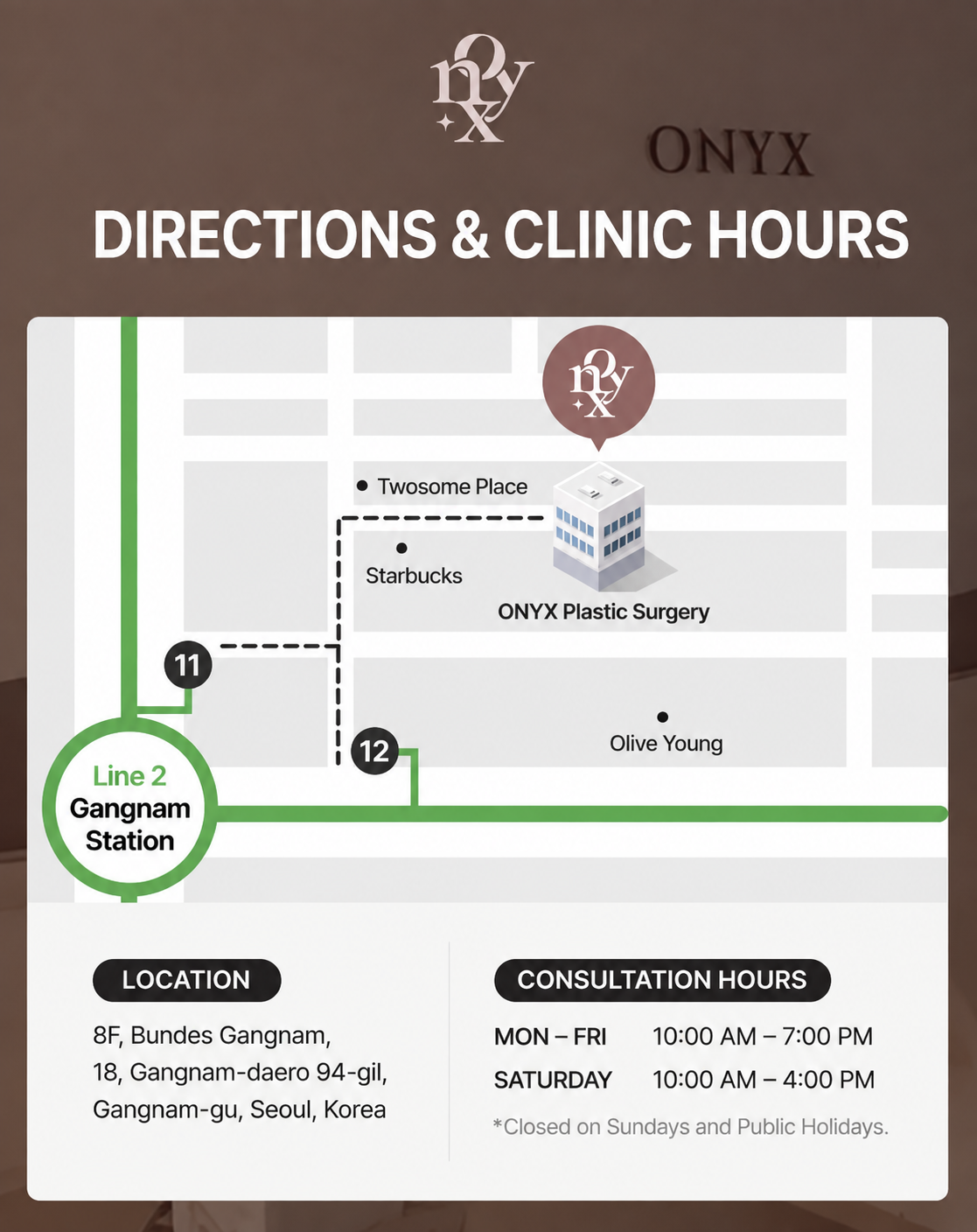
Address
8F, 18 Gangnam-daero 94-gil
Gangnam-gu, Seoul, South Korea
Getting here
Near Gangnam Station
Line 2 · Shinbundang Line
Hours (KST)
Mon–Fri 10:00–19:00
Sat 10:00–16:00
Closed Sundays & public holidays
Contact