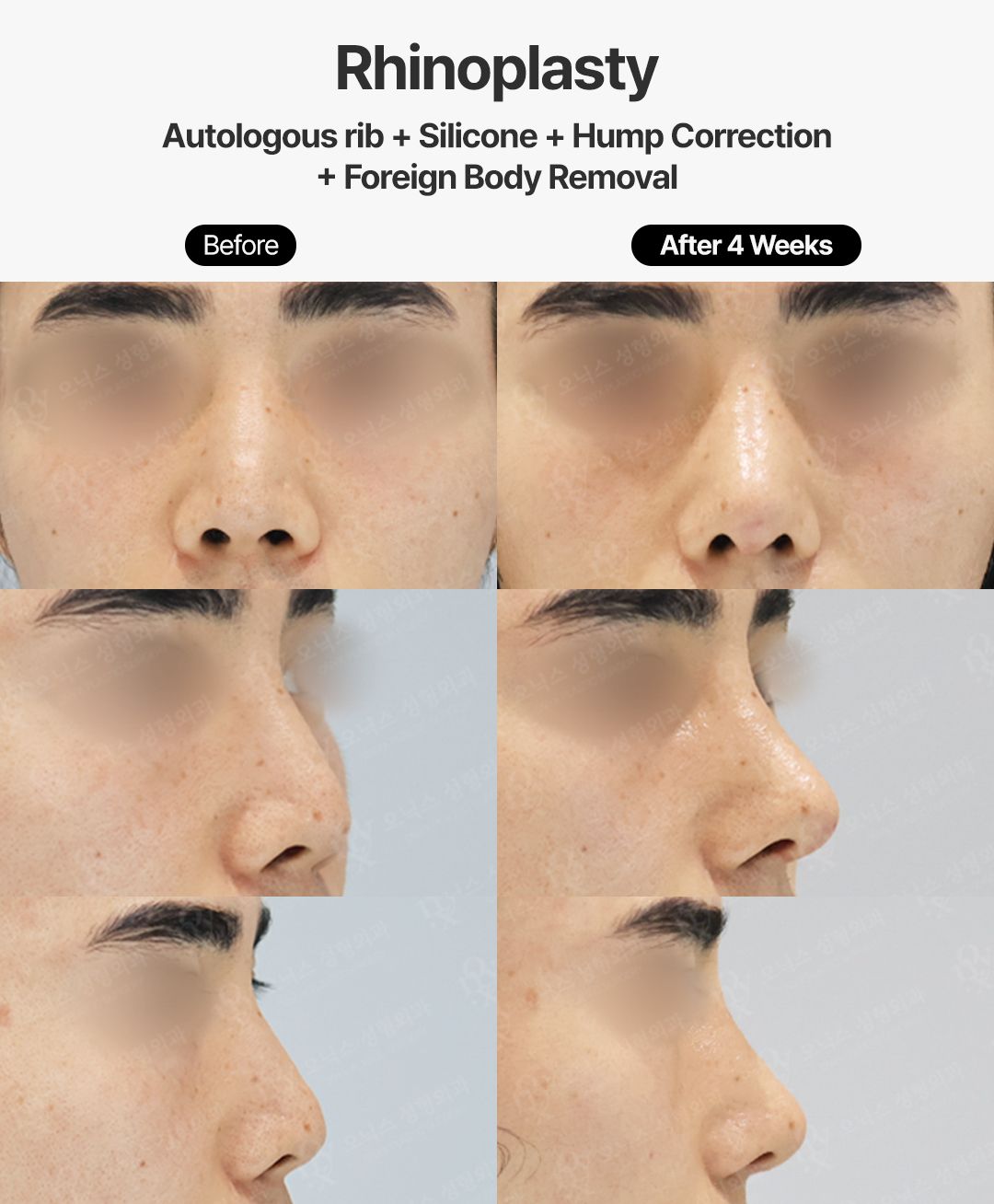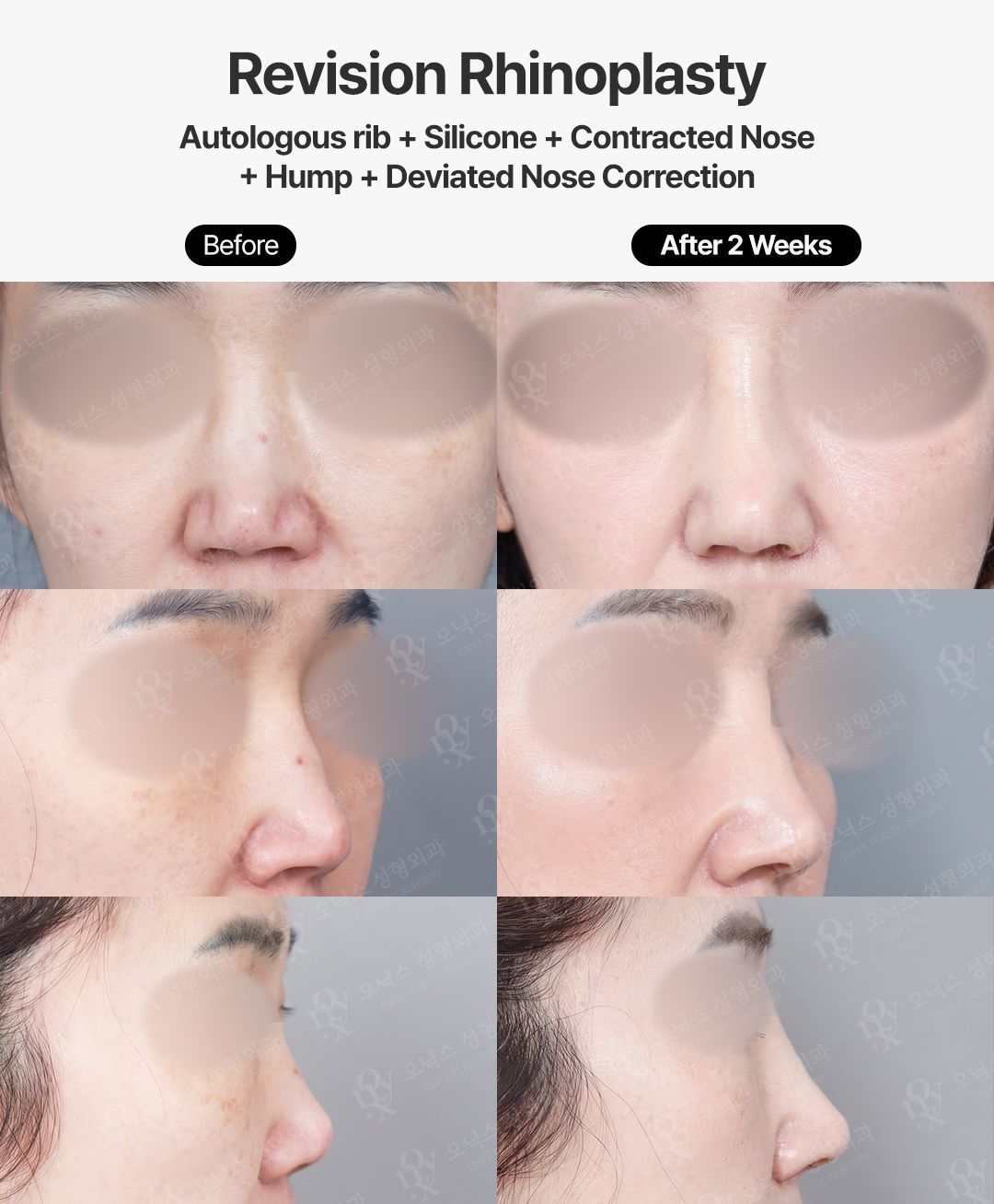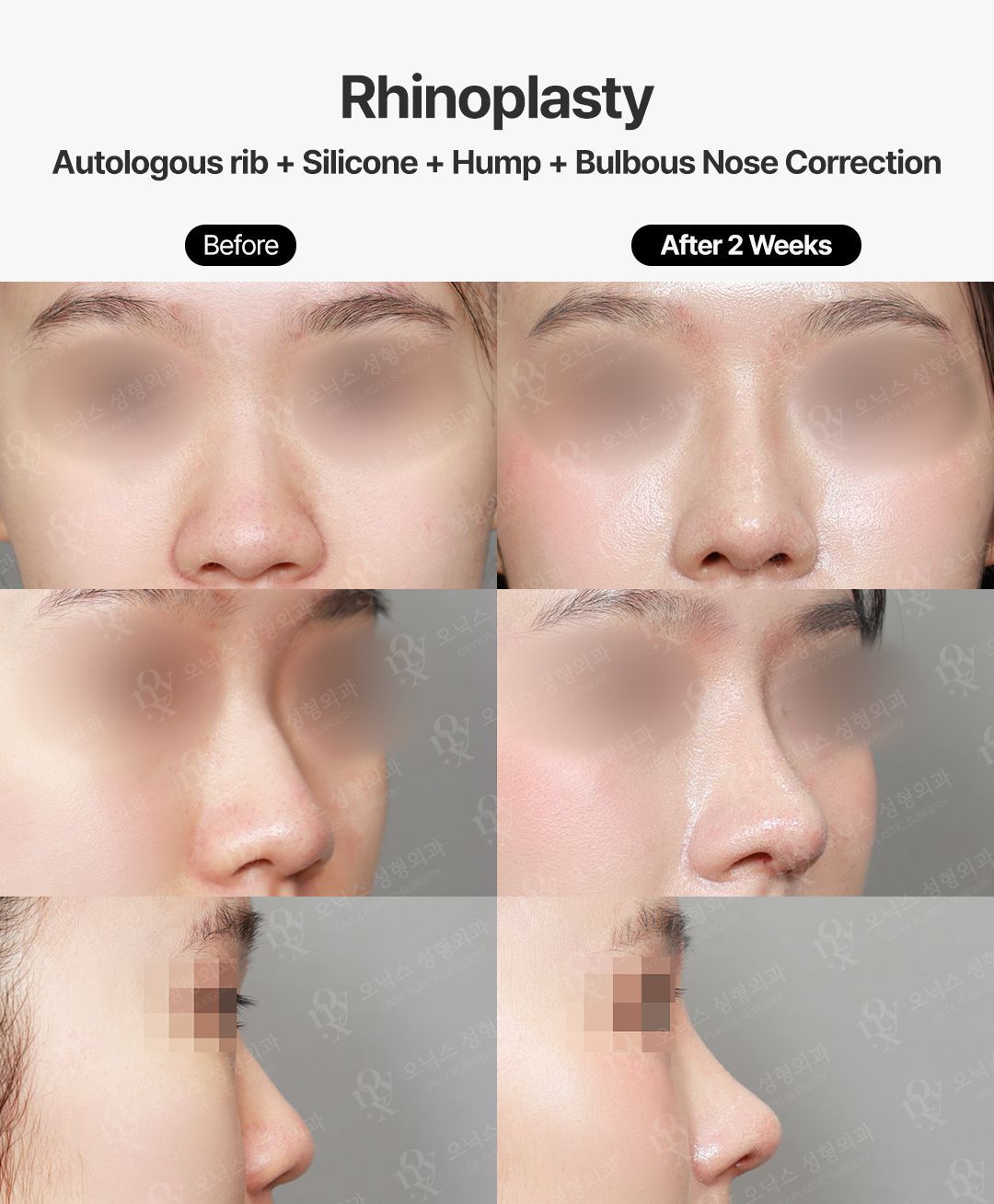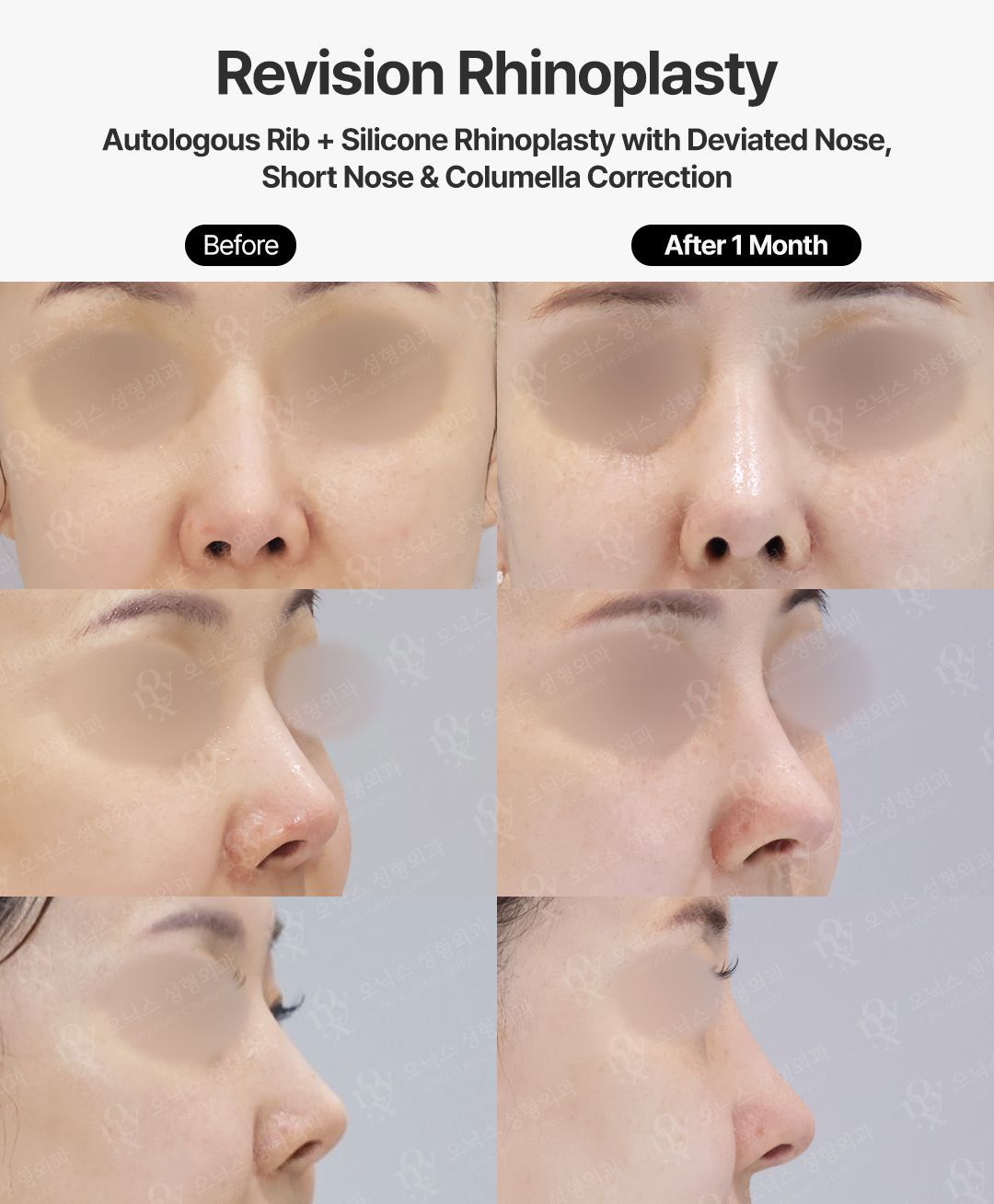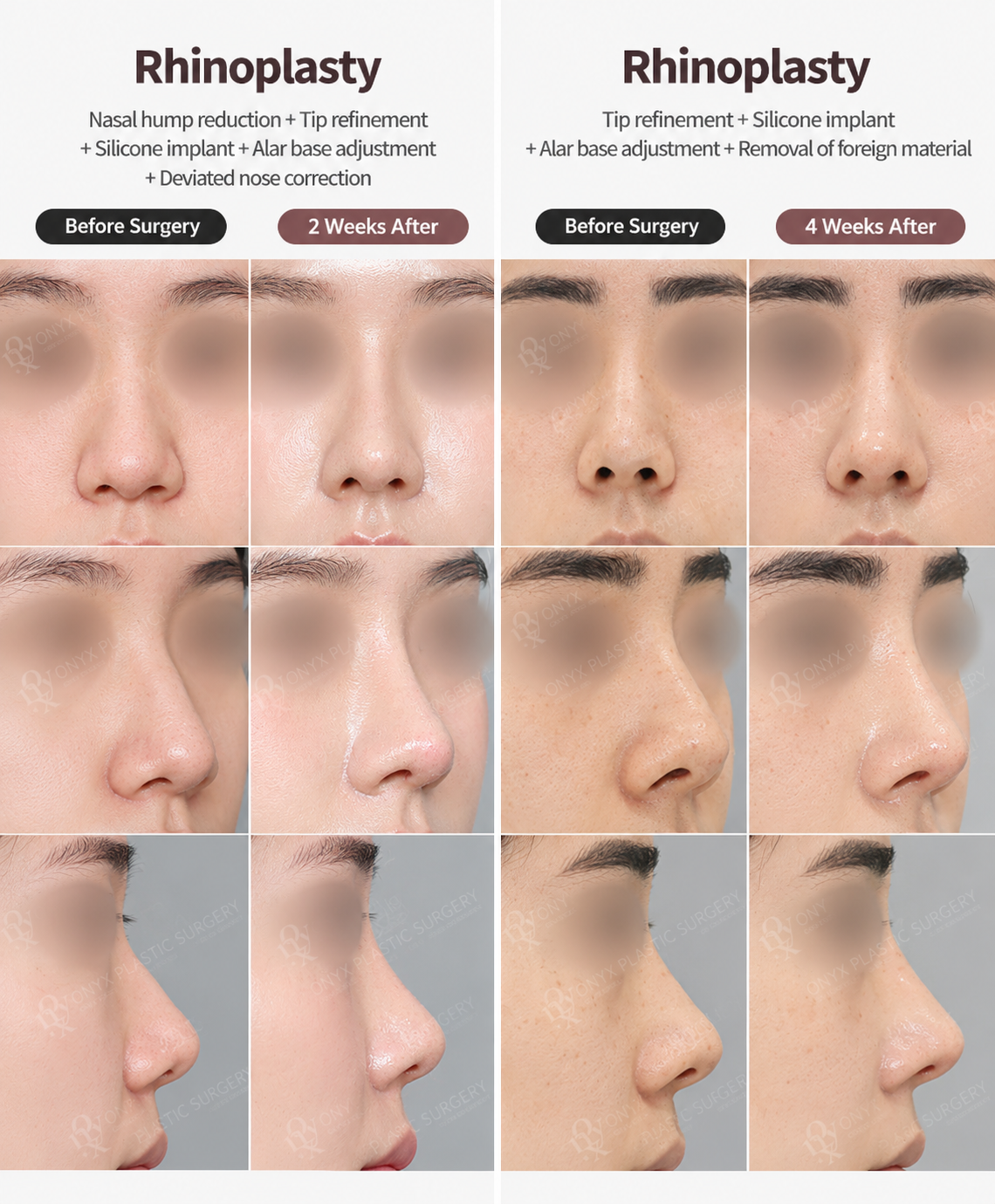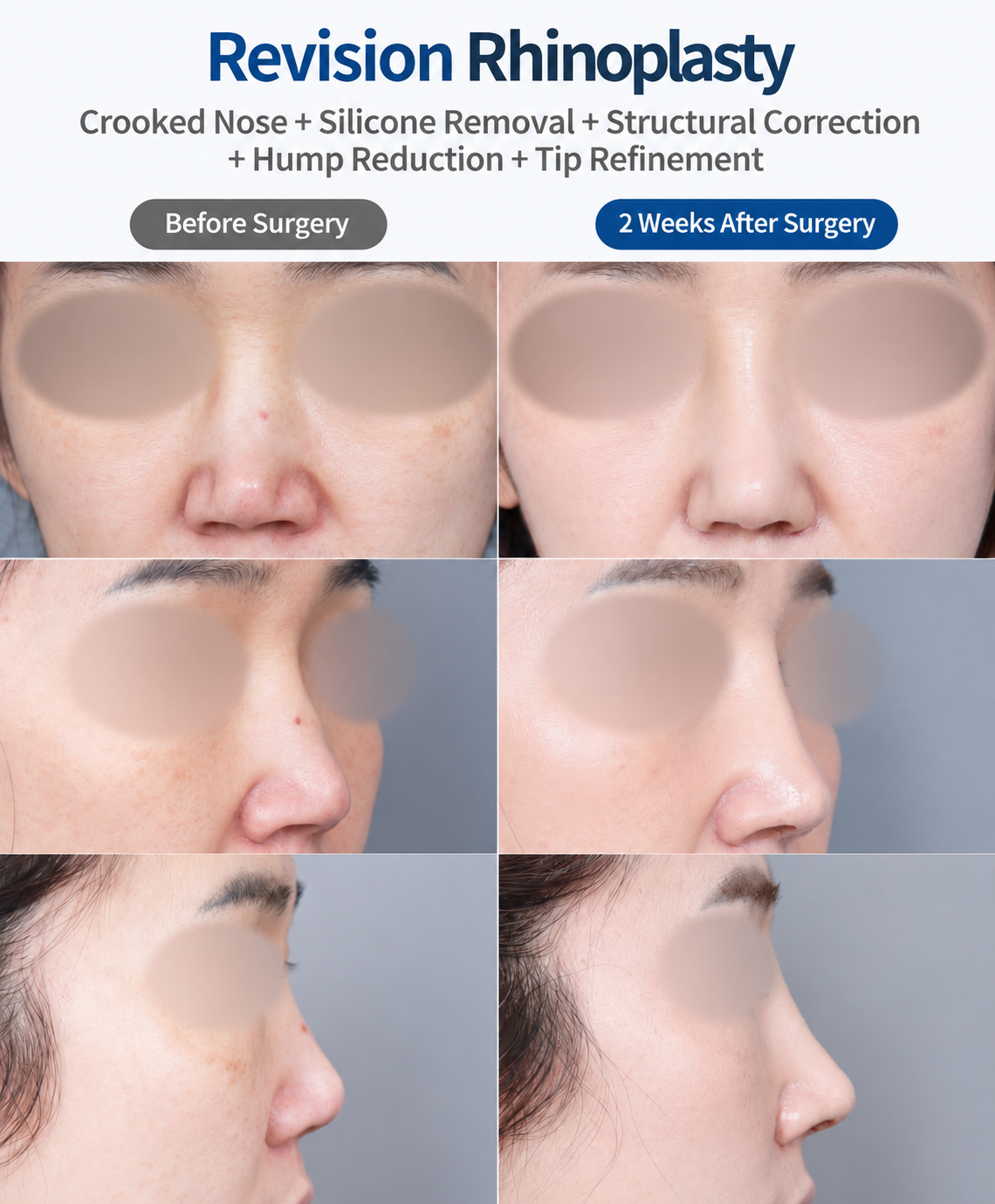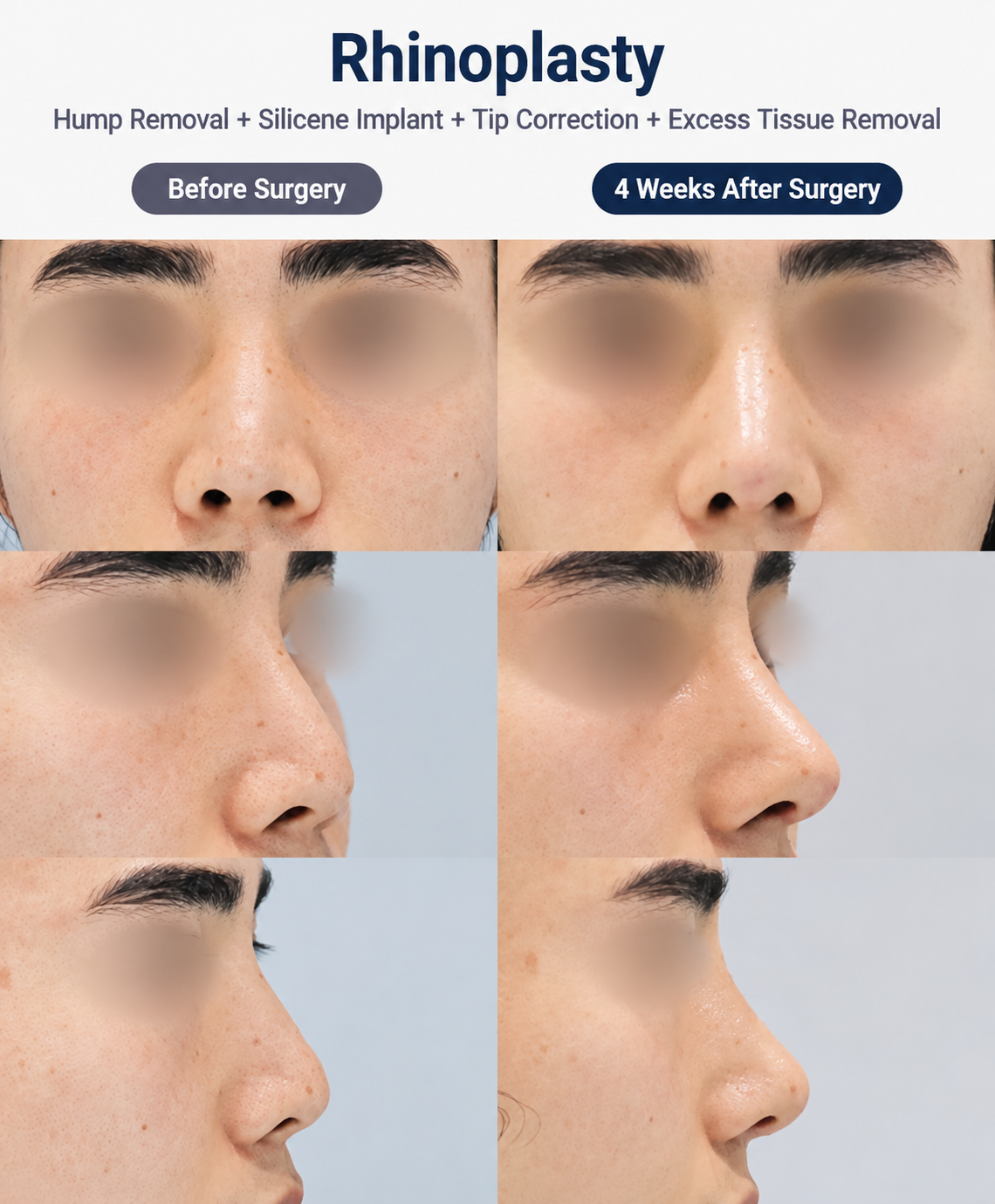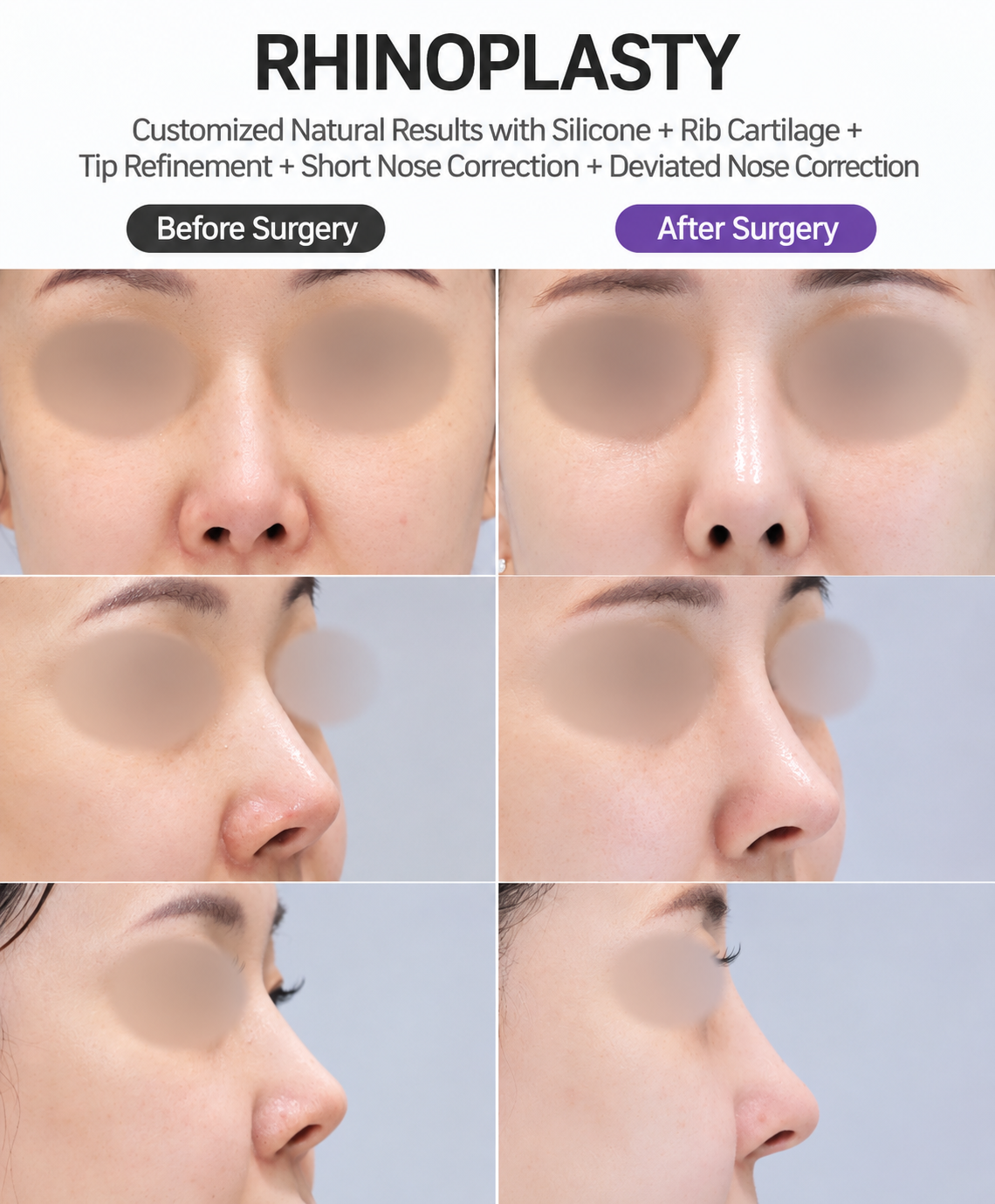
After previous surgery
Pollybeak Deformity Correction in Gangnam, Seoul
a clean line above the tip.
A pollybeak deformity is a fullness just above the nose tip that makes the profile curve like a parrot’s beak, most often after a previous rhinoplasty. At ONYX in Gangnam, Seoul, Dr. Yoo finds whether bone, cartilage, scar or loss of tip support is the cause and corrects it.
- 01 1:1 consultation with the operating surgeon
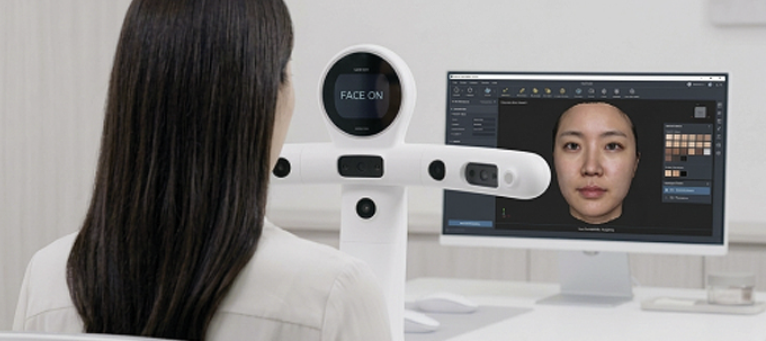
- 02 3D CT scan & virtual simulation before surgery
- 03 Structure-first design with your own cartilage
- 04 English-friendly support via WhatsApp
What is a pollybeak deformity?
A pollybeak deformity is a convex fullness in the supratip, the area just above the tip, so the tip sits lower than the bridge in profile. It can be caused by too much cartilage left above the tip, scar tissue, or a tip that lost support and dropped.
Correction depends on the cause: excess cartilage is reduced, scar tissue is addressed and, very often, tip support is rebuilt so the tip once again sits slightly above the line of the bridge.
| Surgery time | About 3–4 hours |
|---|---|
| Anaesthesia | General anaesthesia |
| Approach | Usually open |
| Grafts | Septal, ear or rib cartilage |
| Stay in Seoul | About 7–10 days, sometimes longer |
| Final result | About 12 months |
Signs you may relate to
- There is a bump just above your nose tip
- Your profile curves down like a beak
- The area above the tip stayed full long after surgery
- Your tip seems lower than your bridge
- The problem appeared after a previous rhinoplasty
Supratip swelling is normal for months after rhinoplasty. A true pollybeak is usually assessed at least a year after surgery.
How a pollybeak is corrected
- STEP 01
Identify the cause
Cartilage, scar and tip support are assessed separately.
- STEP 02
Reduce excess
Extra cartilage or bone in the supratip is reduced carefully.
- STEP 03
Address scar
Scar tissue is removed and the dead space managed.
- STEP 04
Rebuild tip support
The tip is projected so it sits correctly in relation to the bridge.
Pollybeak correction recovery
Typical timeline only. Healing varies with the procedure, skin thickness and materials used.
- Day 1–3 Swelling and discomfort, controlled with medication; the chest site is sore if rib cartilage was used.
- Day 7 Splint and stitches removed and the wound checked.
- Week 2–4 Bruising fades; swelling is still clearly present.
- Month 3–6 Scar tissue softens and the new shape becomes clearer.
- Month 12 The final result of revision surgery settles.
Pollybeak Deformity in Seoul: your questions answered.
Is supratip swelling the same as a pollybeak?
Not necessarily. Swelling above the tip can last months after surgery. A persistent fullness after about a year may be a true pollybeak.
Can injections help?
In early scar-related fullness, steroid injections are sometimes used under medical supervision. Structural causes need surgery.
Why does tip support matter?
If the tip drops, the bridge above it looks too high. Restoring tip projection is often the key to correction.
Is revision always open?
Most pollybeak corrections are done with an open approach for precision.
How long until the final profile?
Revision tissues take about a year to fully settle.
Often considered together
Plan your pollybeak deformity consultation in Gangnam, Seoul.
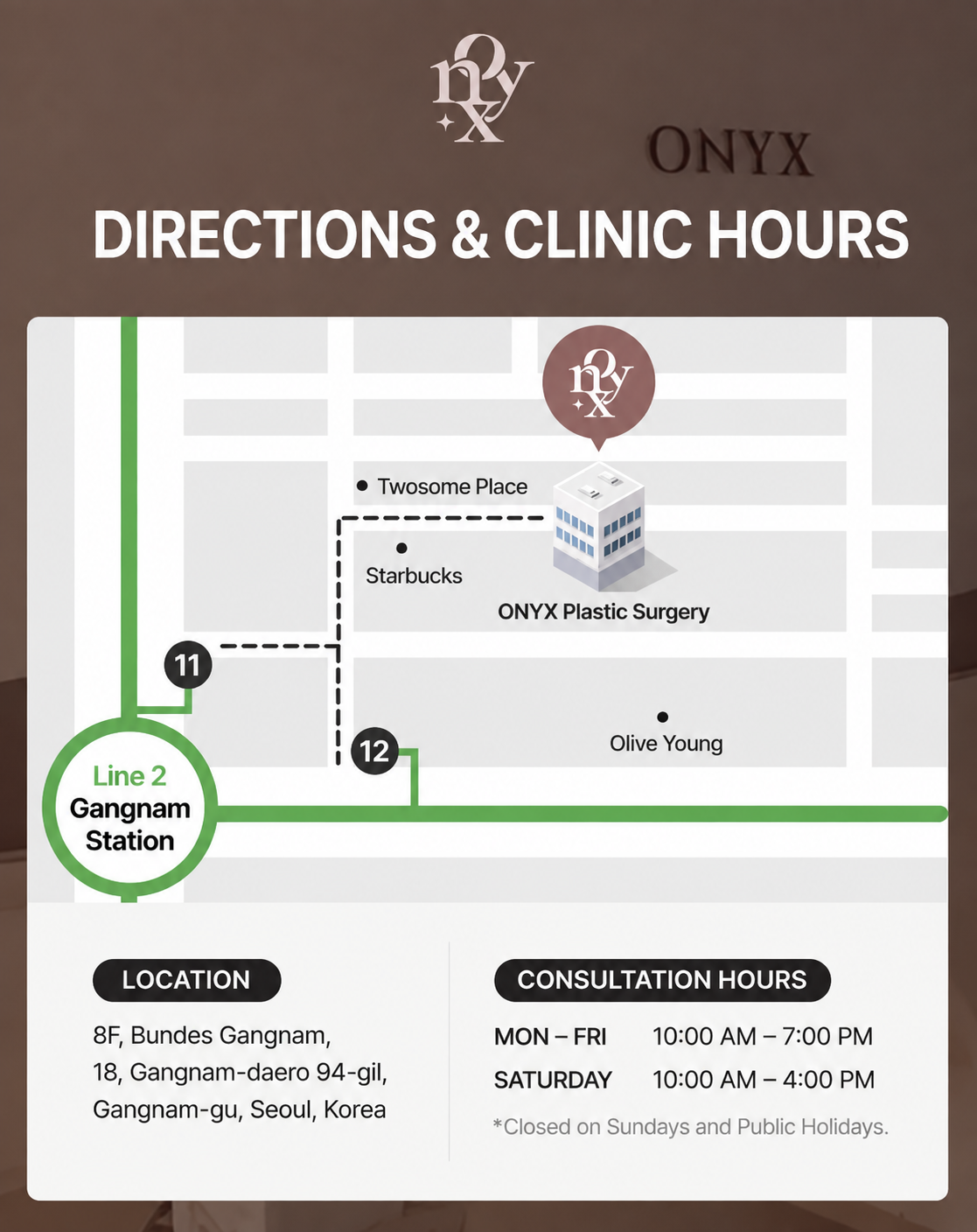
Address
8F, 18 Gangnam-daero 94-gil
Gangnam-gu, Seoul, South Korea
Getting here
Near Gangnam Station
Line 2 · Shinbundang Line
Hours (KST)
Mon–Fri 10:00–19:00
Sat 10:00–16:00
Closed Sundays & public holidays
Contact