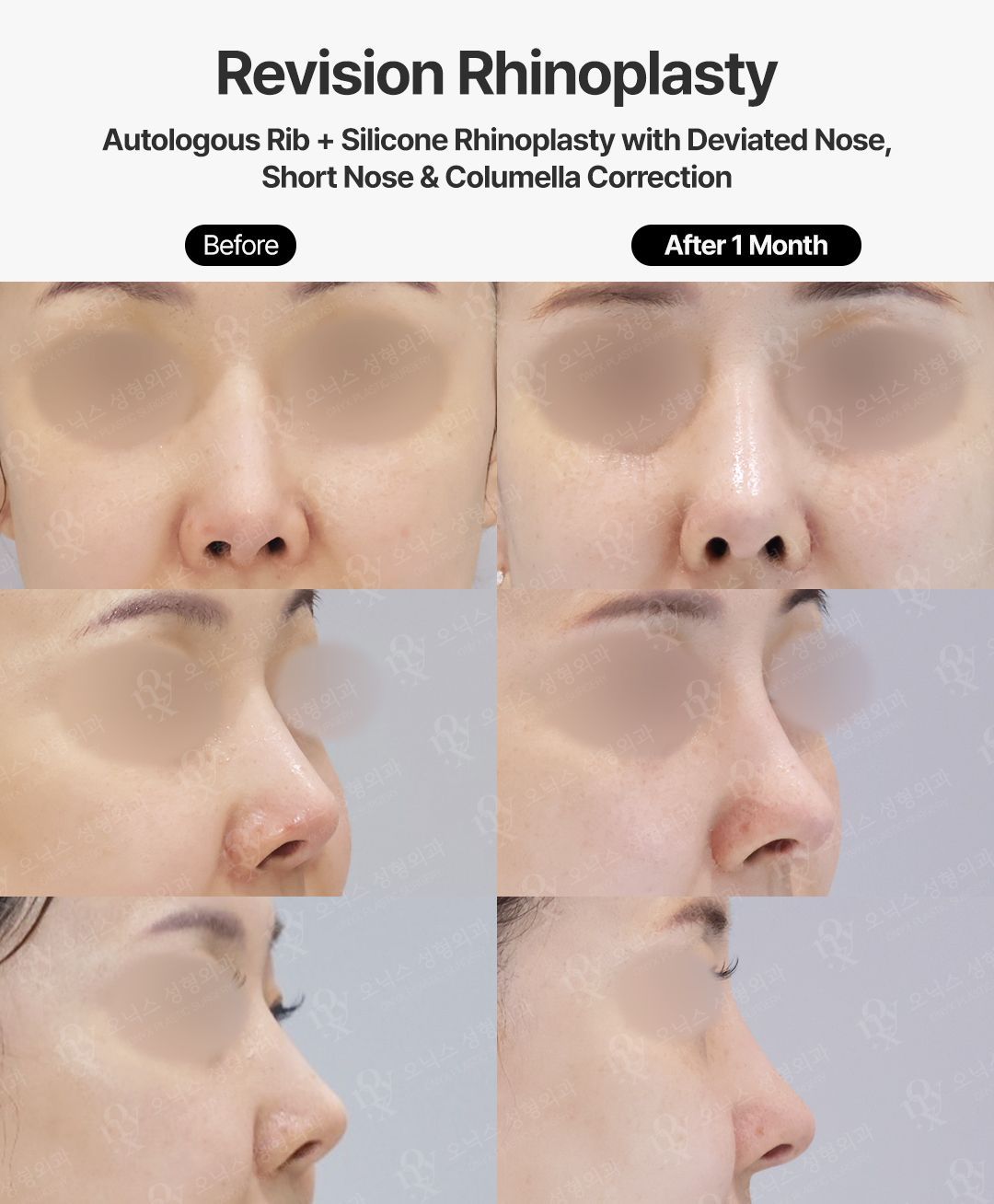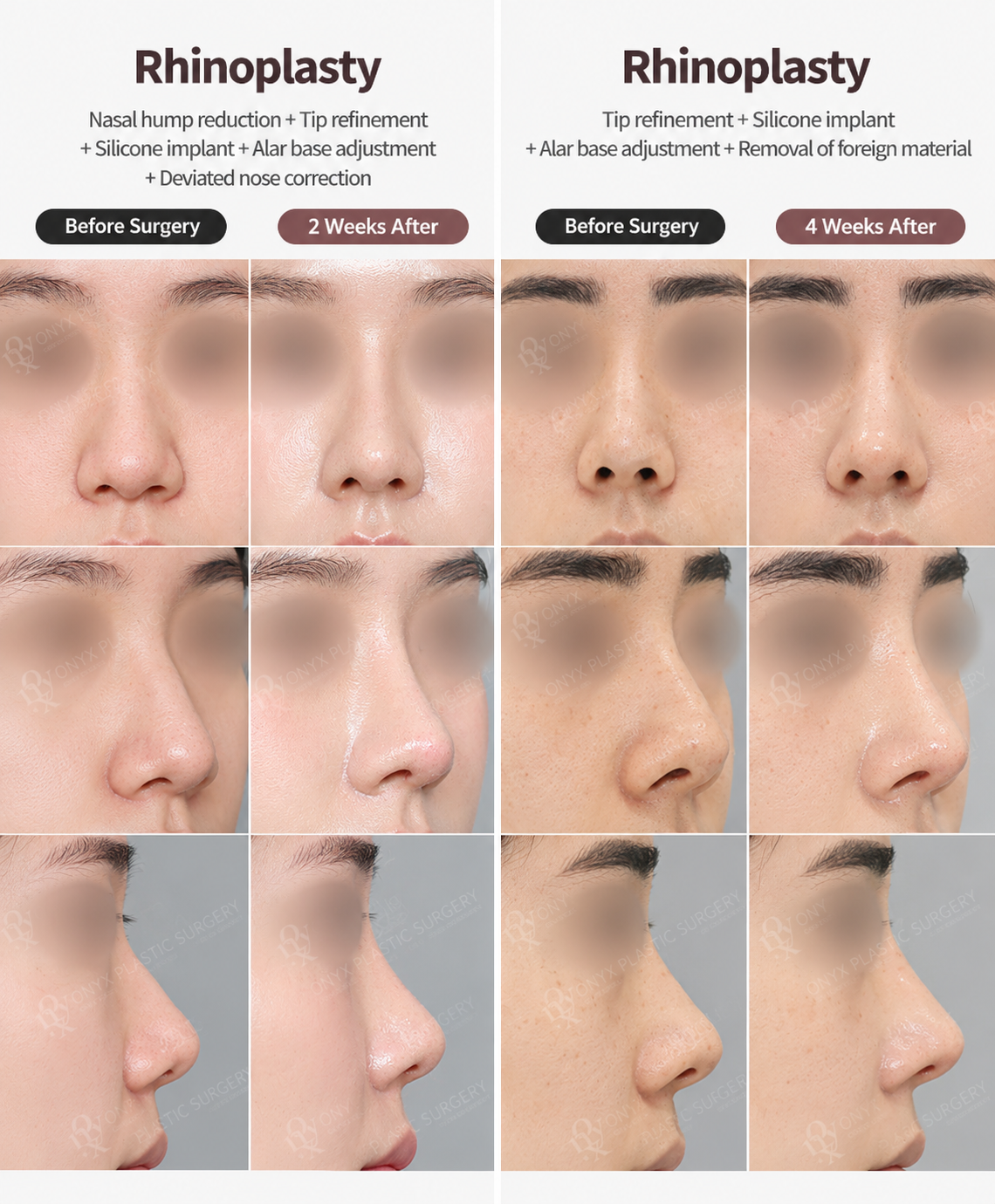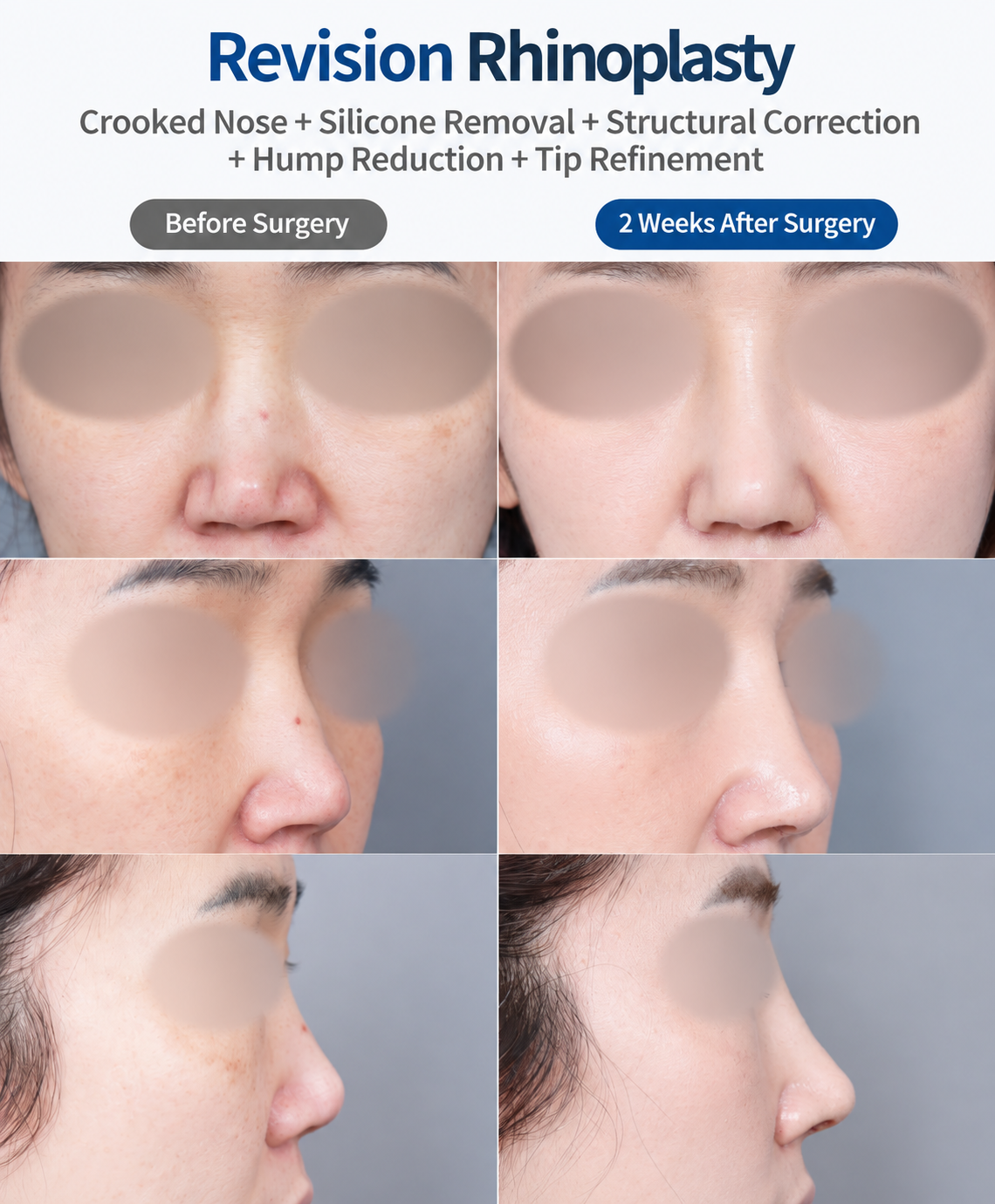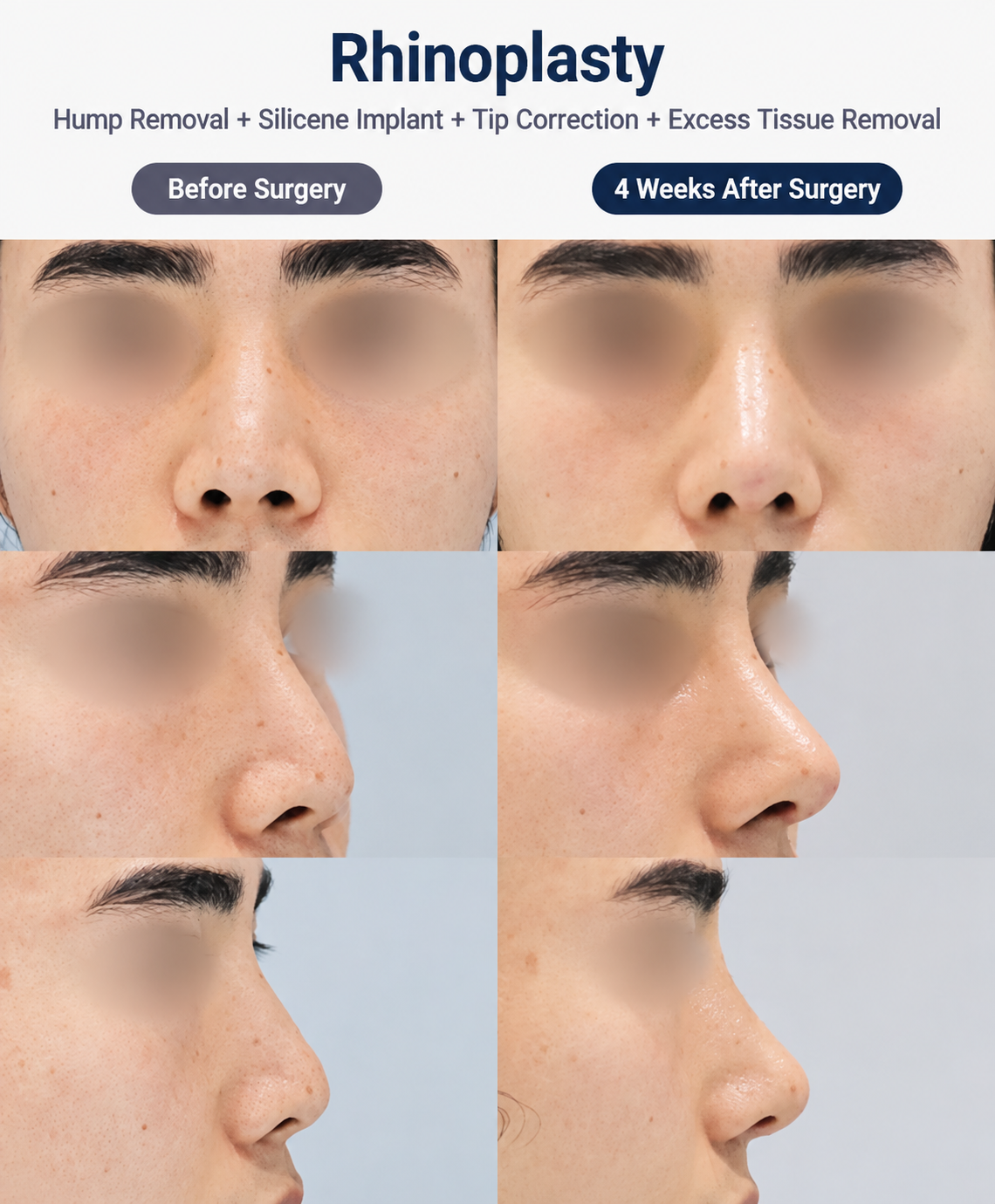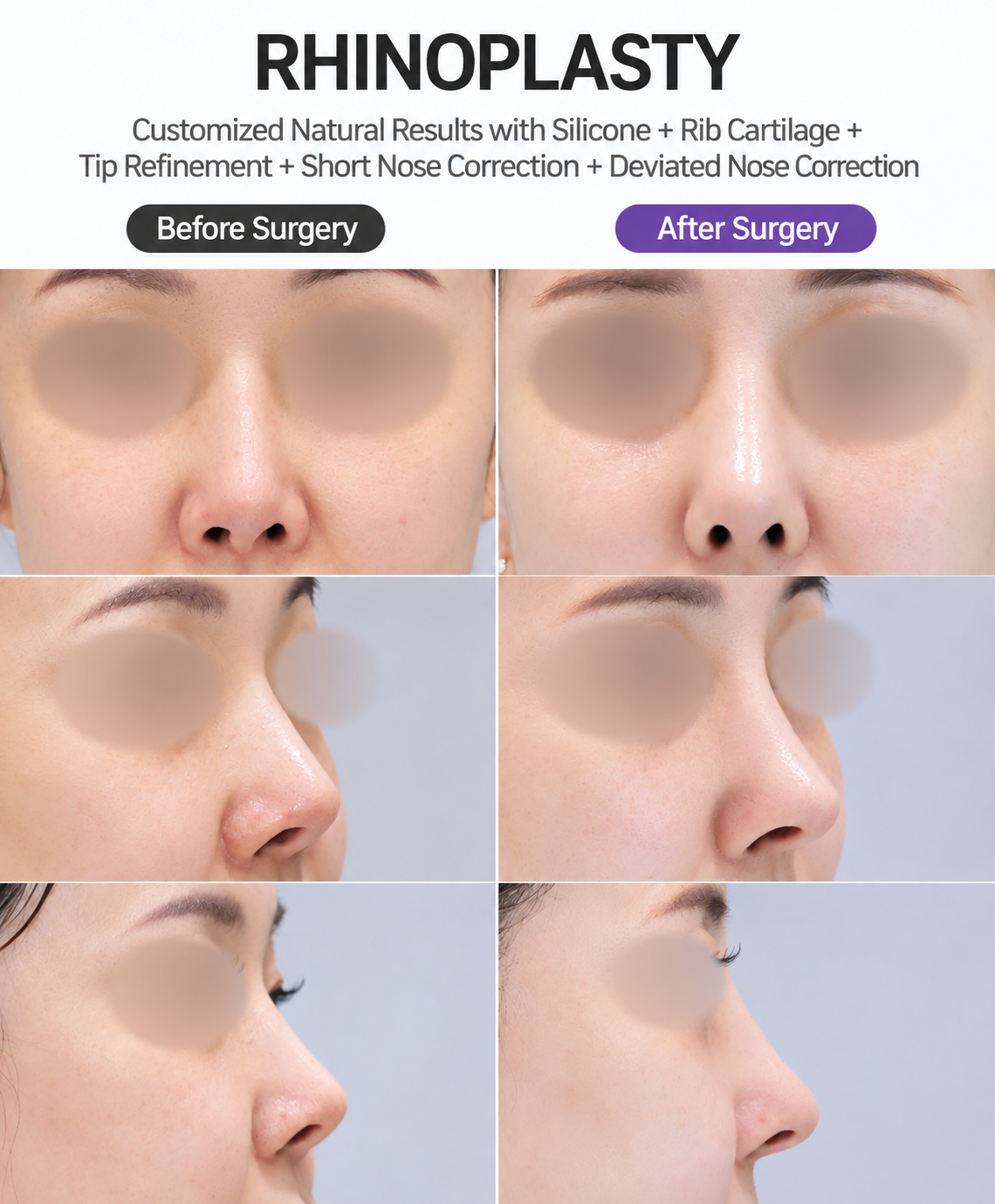
Secondary nose surgery
Revision Rhinoplasty in Gangnam, Seoul
fix the structure, not just the shape.
Revision rhinoplasty corrects problems left by a previous nose surgery, from a visible or shifting implant to a tip that has dropped, twisted or contracted. At ONYX in Gangnam, Seoul, Dr. Yoo rebuilds the support underneath first, because reshaping the surface alone rarely holds a second time.
- 01 1:1 consultation with the operating surgeon
- 02 3D CT scan & virtual simulation before surgery
- 03 Structure-first design with your own cartilage
- 04 English-friendly support via WhatsApp
What is revision rhinoplasty?
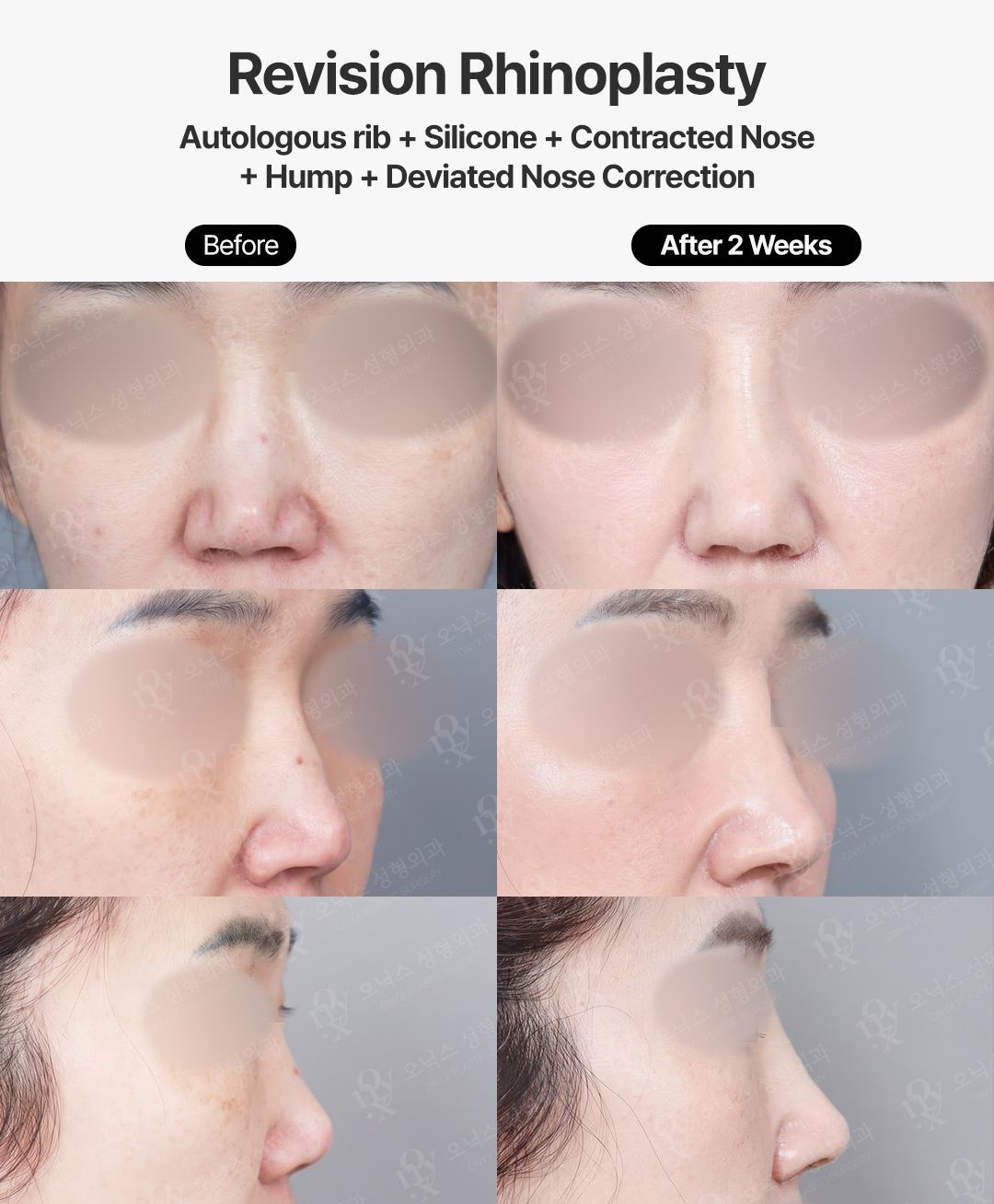
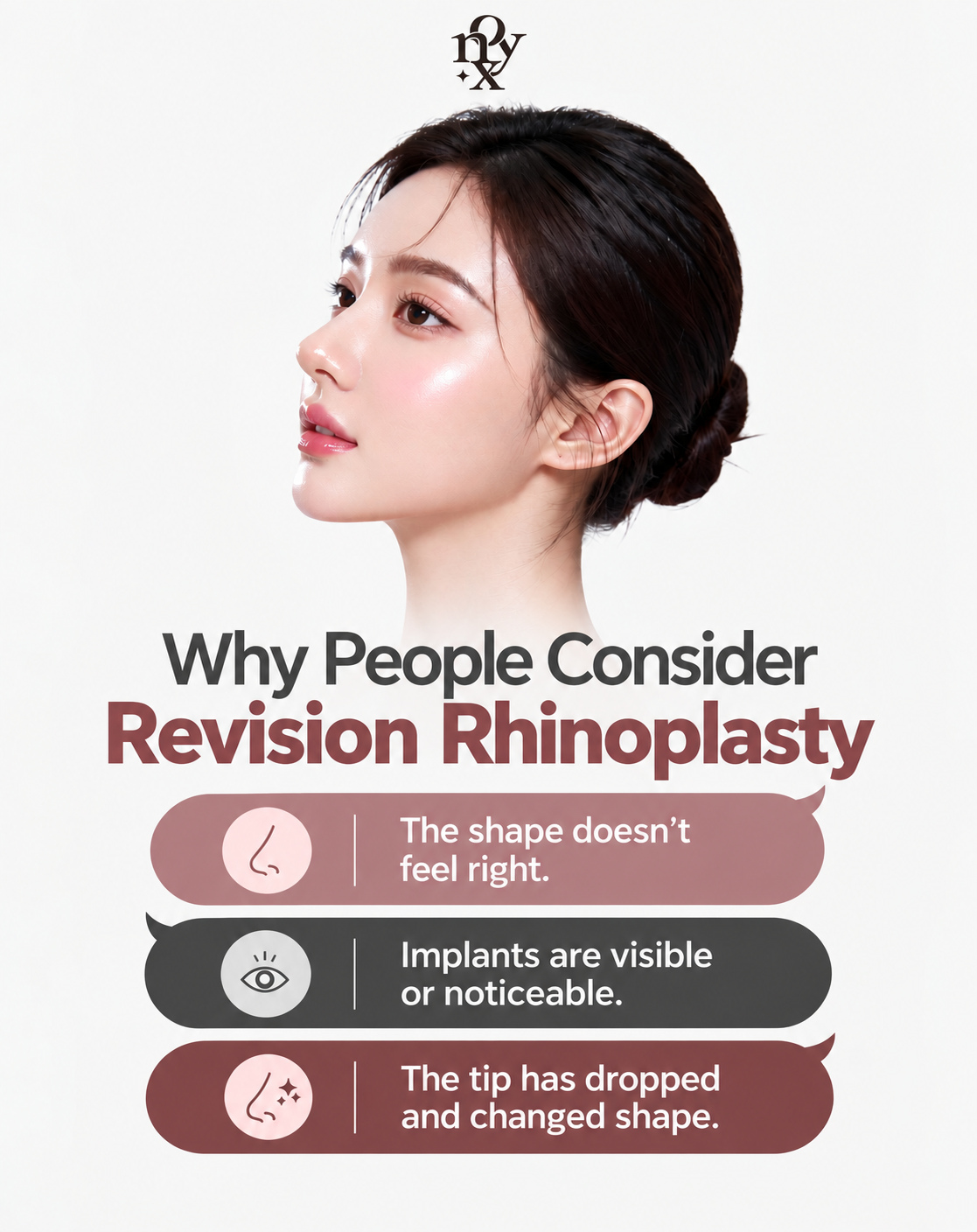
Revision (secondary) rhinoplasty is a second or later operation to correct the function or appearance of a nose that has already had surgery. Common reasons include an implant that is visible, shifted or causing redness, a short or upturned tip, a crooked nose, or breathing problems.
Because previous surgery leaves scar tissue and often uses up septal cartilage, revision usually needs ear or rib cartilage and an open approach.
| Surgery time | About 2.5–4 hours |
|---|---|
| Anaesthesia | General anaesthesia |
| Approach | Usually open |
| Grafts | Ear or rib cartilage often needed |
| Earliest timing | Usually 6–12 months after the last surgery |
| Stay in Seoul | About 10–14 days |
Common reasons for revision
- An implant that is visible, has shifted or looks shiny
- A tip that has dropped, twisted or become pinched
- A nose that has shortened or turned up over time
- A crooked or asymmetrical result
- Breathing that became worse after surgery
Redness, thinning skin or an implant pushing through the skin needs urgent assessment rather than waiting.
How revision rhinoplasty is planned
- STEP 01
Diagnose
3D CT shows the remaining cartilage, the implant position and scar tissue.
- STEP 02
Remove & release
Problem implants are removed and scar contracture is released.
- STEP 03
Rebuild
Ear or rib cartilage rebuilds the septum, tip support and bridge.
- STEP 04
Refine
The new framework is shaped into a natural, stable line.
Revision recovery
Recovery is usually longer than after a first rhinoplasty, mainly because of swelling in scarred tissue.
Typical timeline only. Healing varies with the procedure, skin thickness and materials used.
- Day 1–3 Swelling and bruising; rest with your head raised.
- Day 7 Splint and stitches removed.
- Week 2–4 Bruising fades; the nose still feels firm.
- Month 3–6 The nose looks natural to others.
- Month 12+ Swelling in thick or scarred skin keeps settling.
Revision Rhinoplasty in Seoul: your questions answered.
How soon can I have revision rhinoplasty?
Usually 6–12 months after the previous surgery, once swelling and scar tissue have settled. Infection or implant exposure is treated sooner.
Will I need rib cartilage?
Often, especially if your septal cartilage was used before or the nose needs strong support. Ear cartilage may be enough for smaller corrections.
Can an old implant be replaced with my own cartilage?
Yes. Many revision patients choose to remove the implant and rebuild with their own cartilage.
How long should I stay in Seoul for revision?
Plan for about 10–14 days to allow for longer healing and follow-up.
Can you review my case before I travel?
Yes. Send current photos and any previous surgery details on WhatsApp for a preliminary assessment.
Plan your revision rhinoplasty consultation in Gangnam, Seoul.
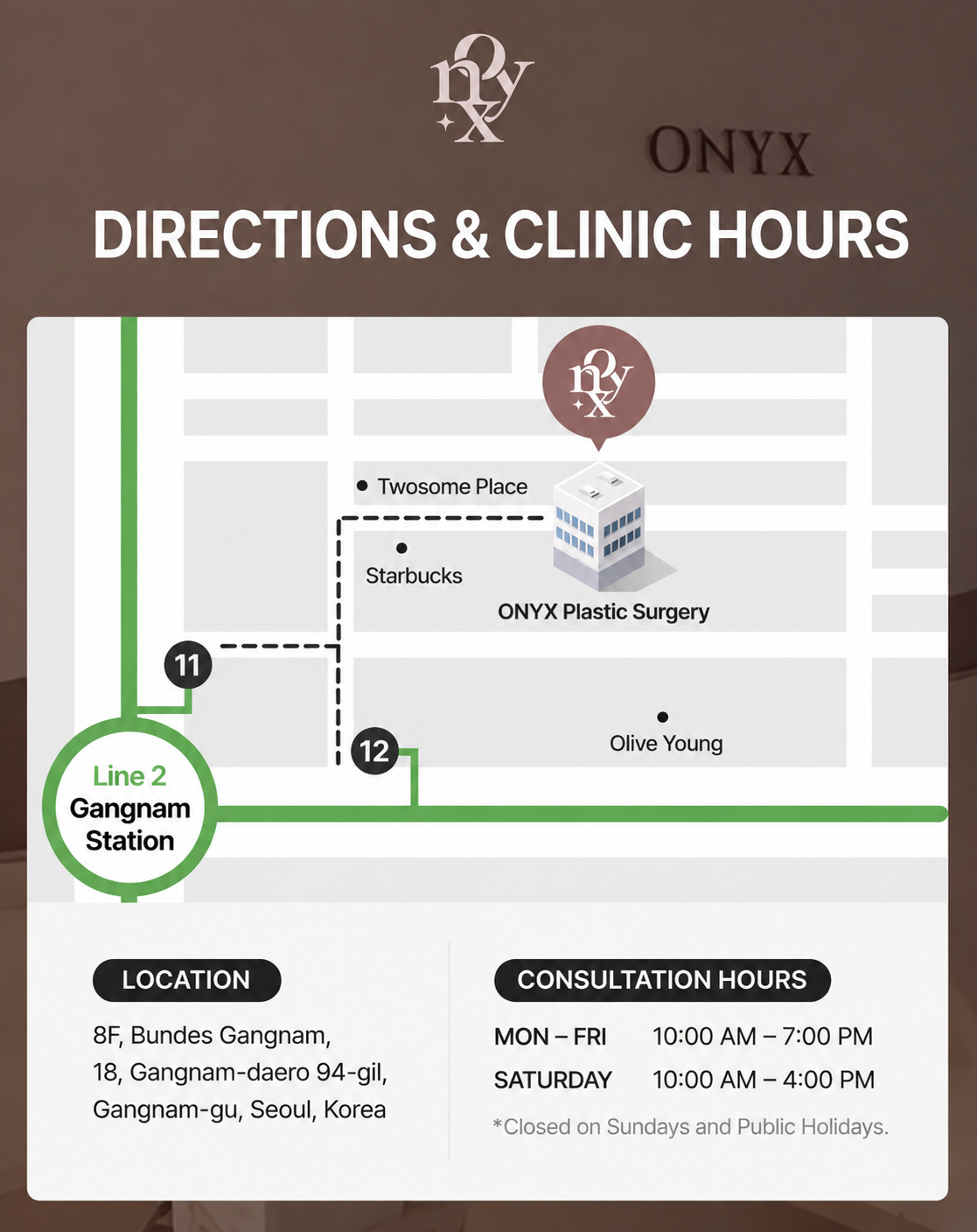
Address
8F, 18 Gangnam-daero 94-gil
Gangnam-gu, Seoul, South Korea
Getting here
Near Gangnam Station
Line 2 · Shinbundang Line
Hours (KST)
Mon–Fri 10:00–19:00
Sat 10:00–16:00
Closed Sundays & public holidays
Contact