ONYX real patient results
Revision Rhinoplasty Before & After Photos in Korea
rebuilt from the structure.
Real revision (secondary) rhinoplasty results from ONYX Plastic Surgery Clinic in Gangnam, Seoul. Each of these patients had nose surgery before. Dr. Yoo Kunwoon, a board-certified plastic surgeon, rebuilt the support with rib cartilage before reshaping. Each case lists the problem, the procedure and when the after photo was taken.
Every photo is a real ONYX patient. Eyes are blurred for privacy. Results vary from person to person.
Quick answer
What can revision rhinoplasty fix?
Revision rhinoplasty corrects problems left by an earlier nose surgery, such as a tip that has shortened or turned up, a nose that looks too long, a crooked or deviated line, a hanging or retracted columella, or asymmetry. At ONYX, revision is usually done through an open approach. Scar tissue is released, any problem implant is replaced and the septum and tip are rebuilt with rib cartilage, because reshaping the surface alone rarely holds a second time. The cases below show the result 1 to 2 months after surgery.
Revision rhinoplasty before and after cases
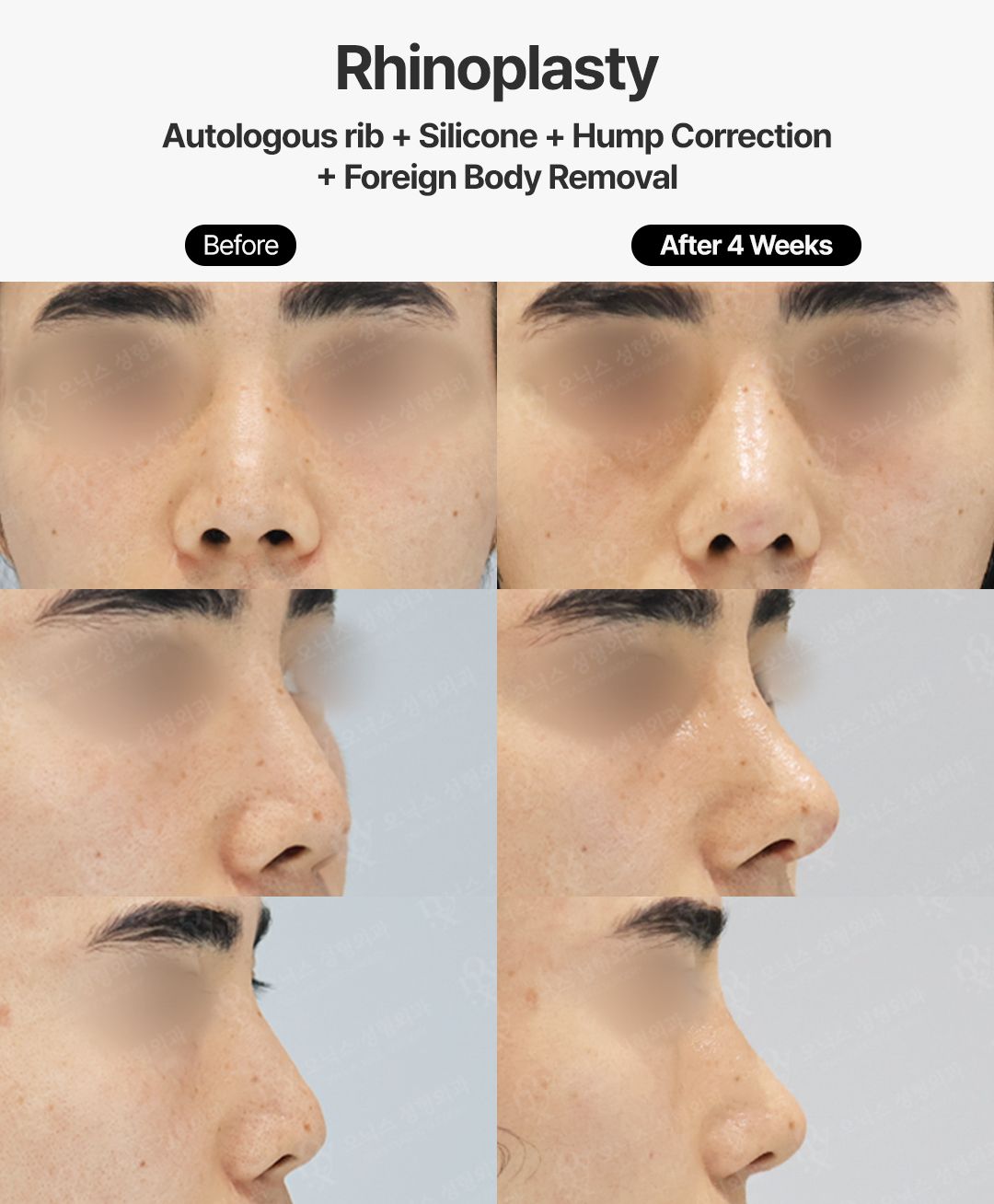
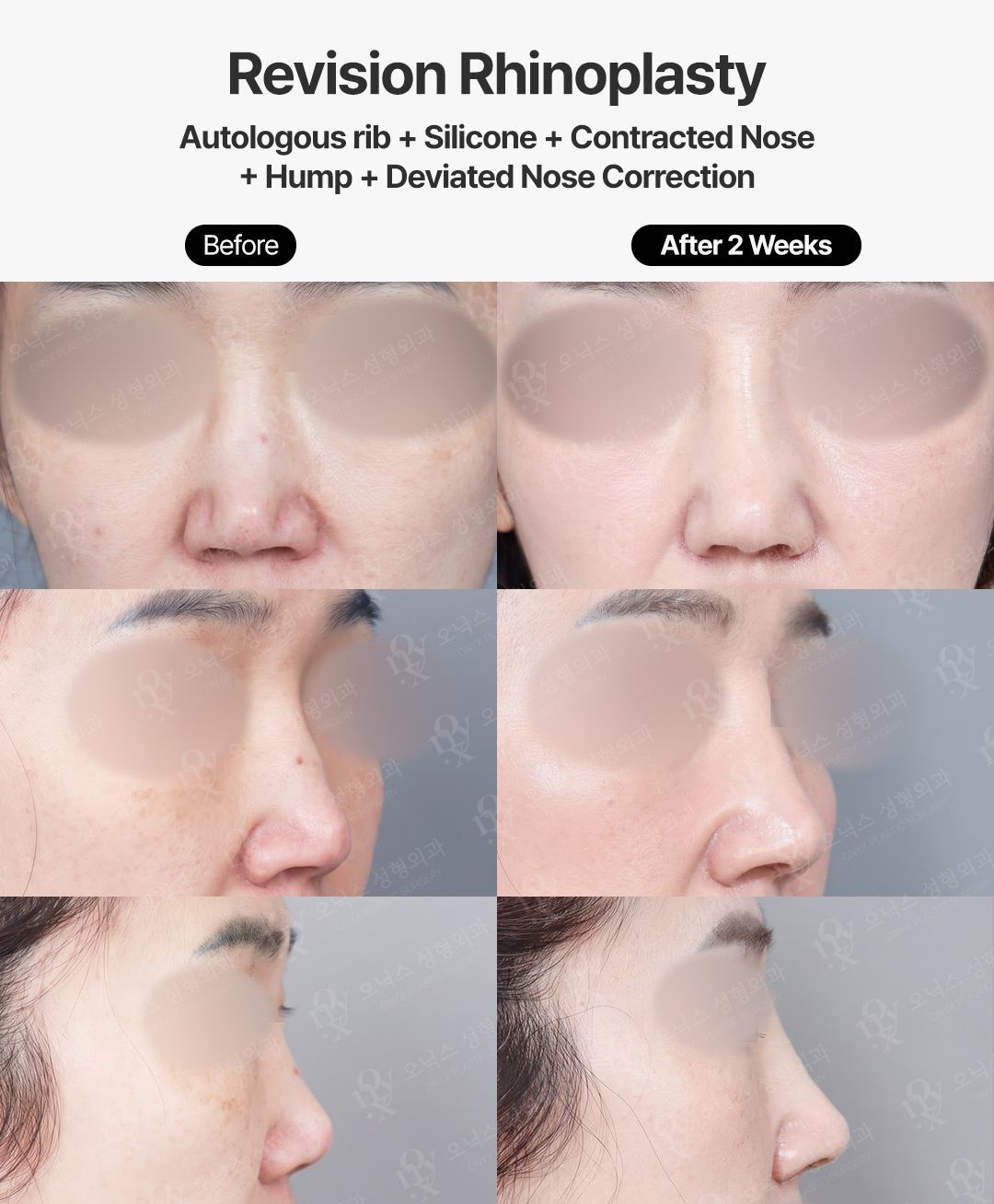
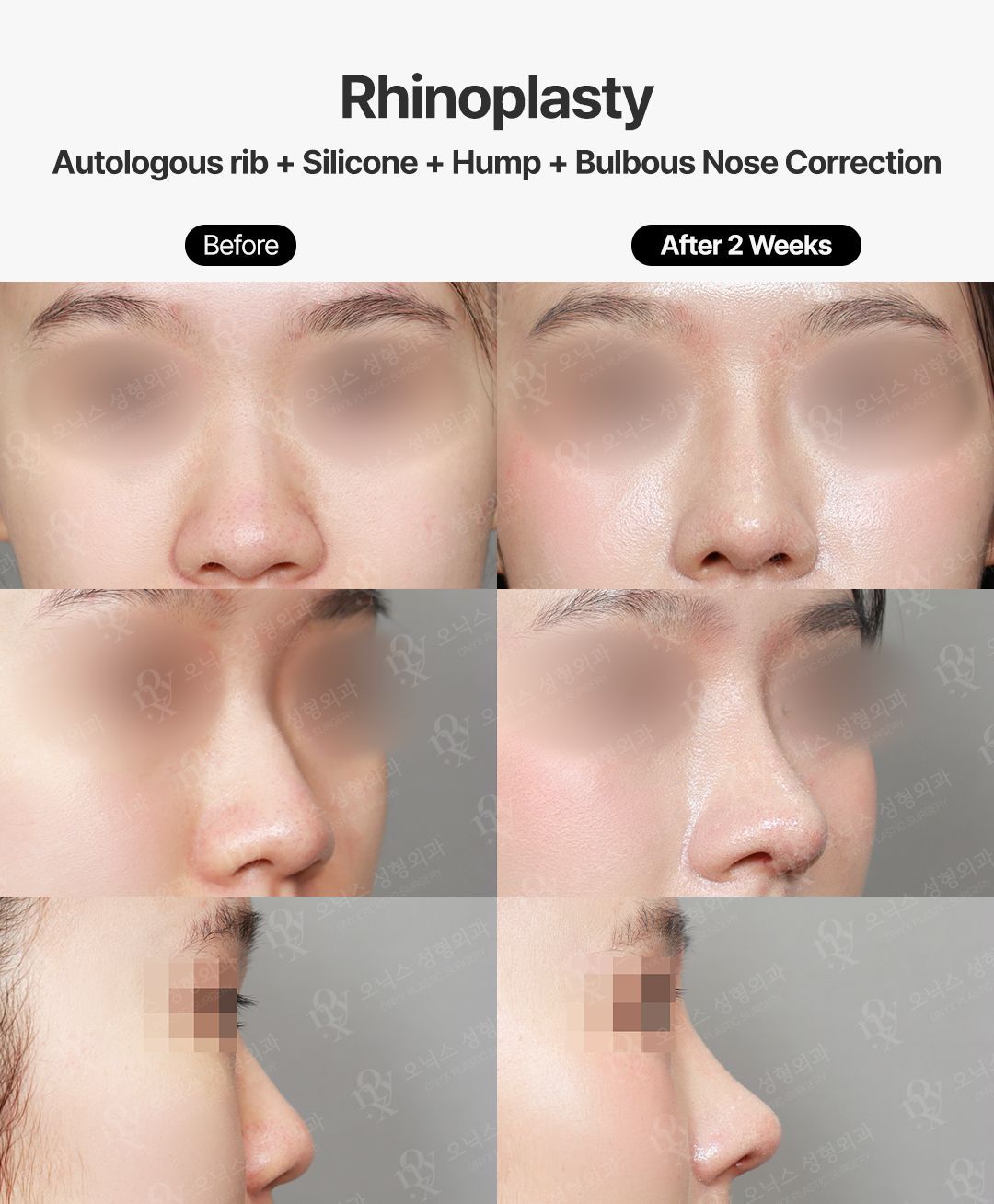
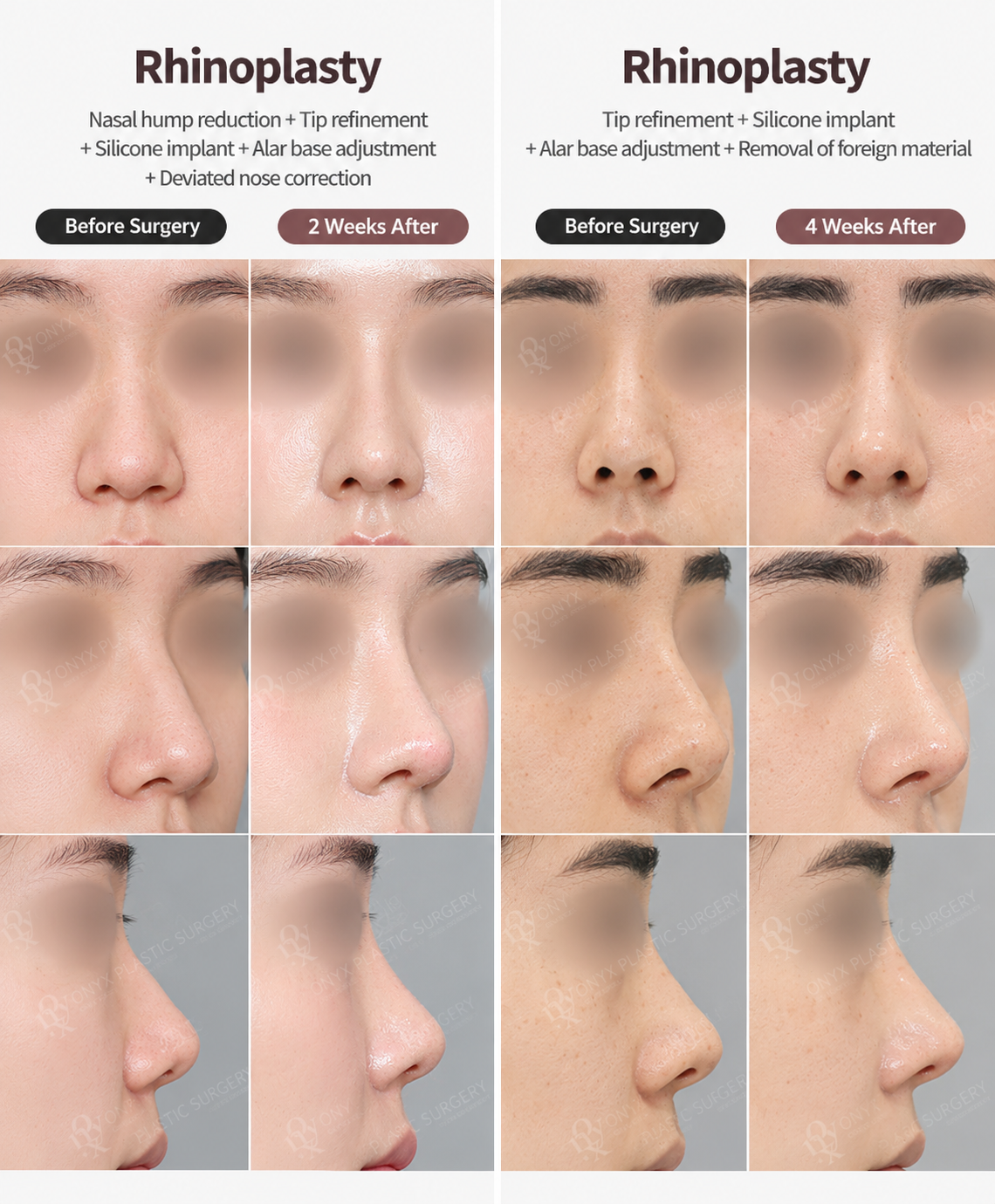
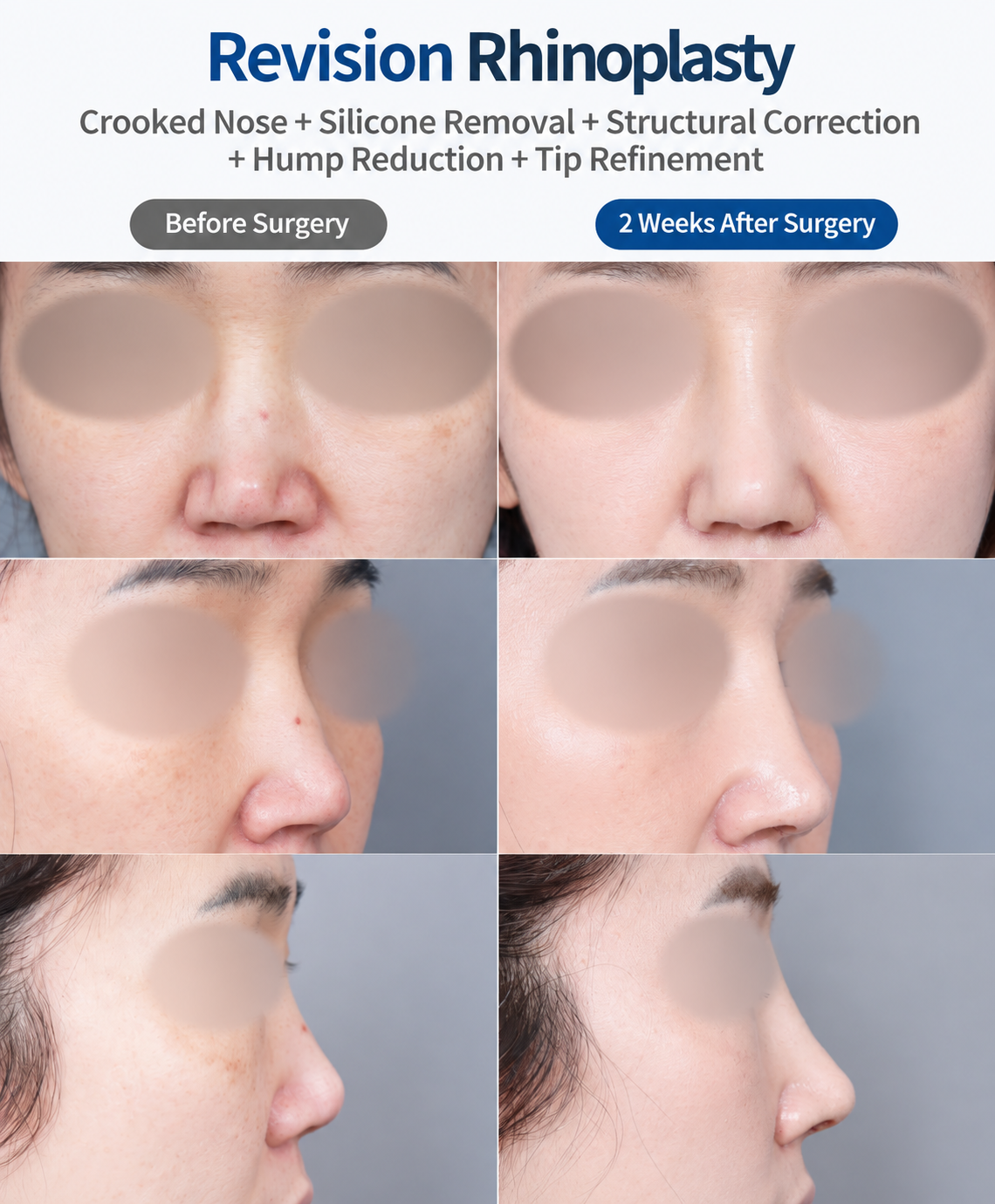
Three secondary rhinoplasty patients, each with a different problem from a previous operation. Each image shows the same patient before revision (left) and after (right).
Case 01
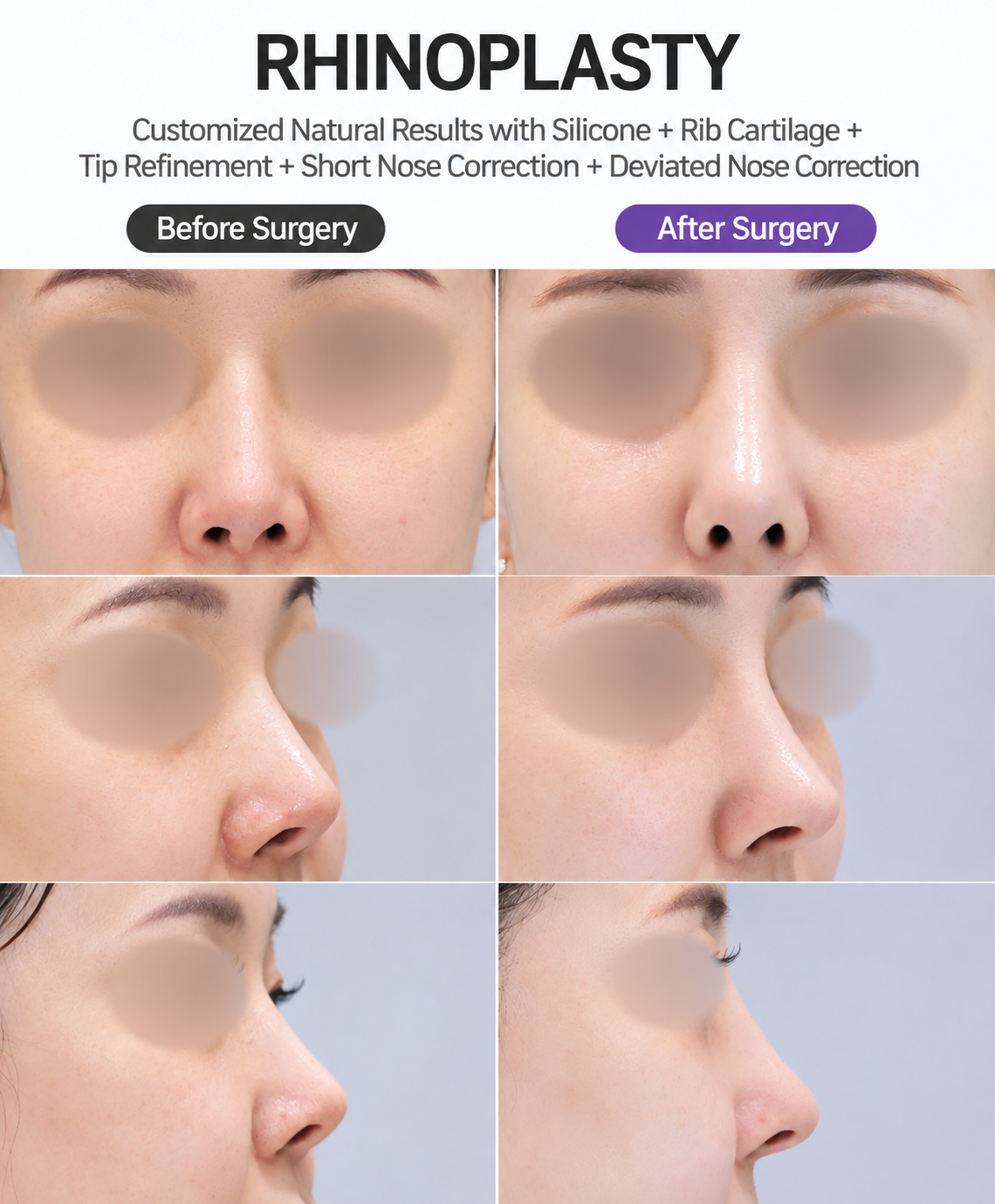
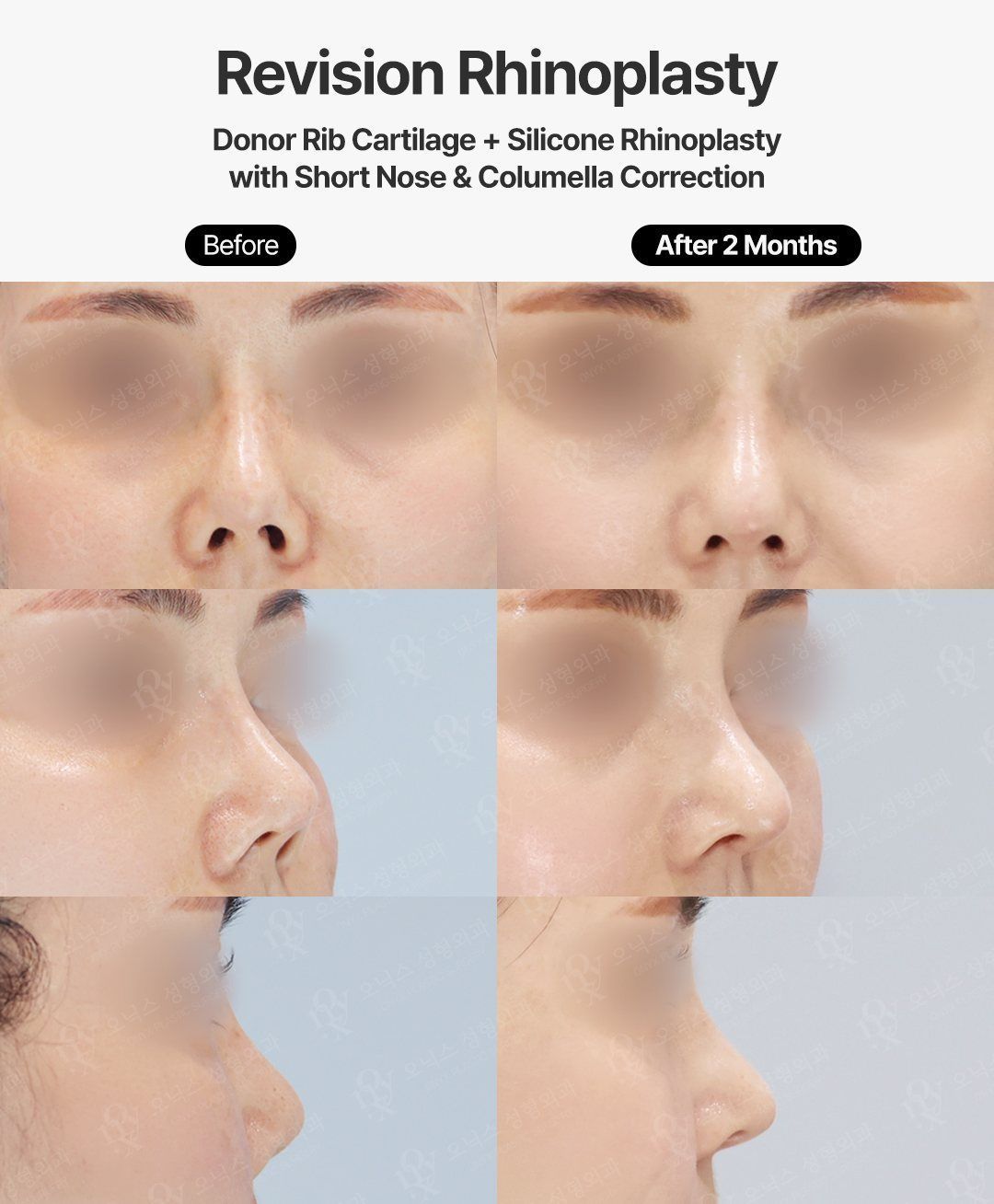
Short nose and columella correction
- Procedure
- Donor rib cartilage + silicone revision rhinoplasty with short nose and columella correction
- Concern
- Nose shortened and tip turned up after a previous surgery, with nostrils showing from the front
- Photo taken
- 2 months after surgery
- Views
- Front, oblique and profile
Scar contracture was released and the septum extended with rib cartilage, bringing the tip down and forward. From the front, less of the nostrils show and the nose looks longer and calmer.
Case 02
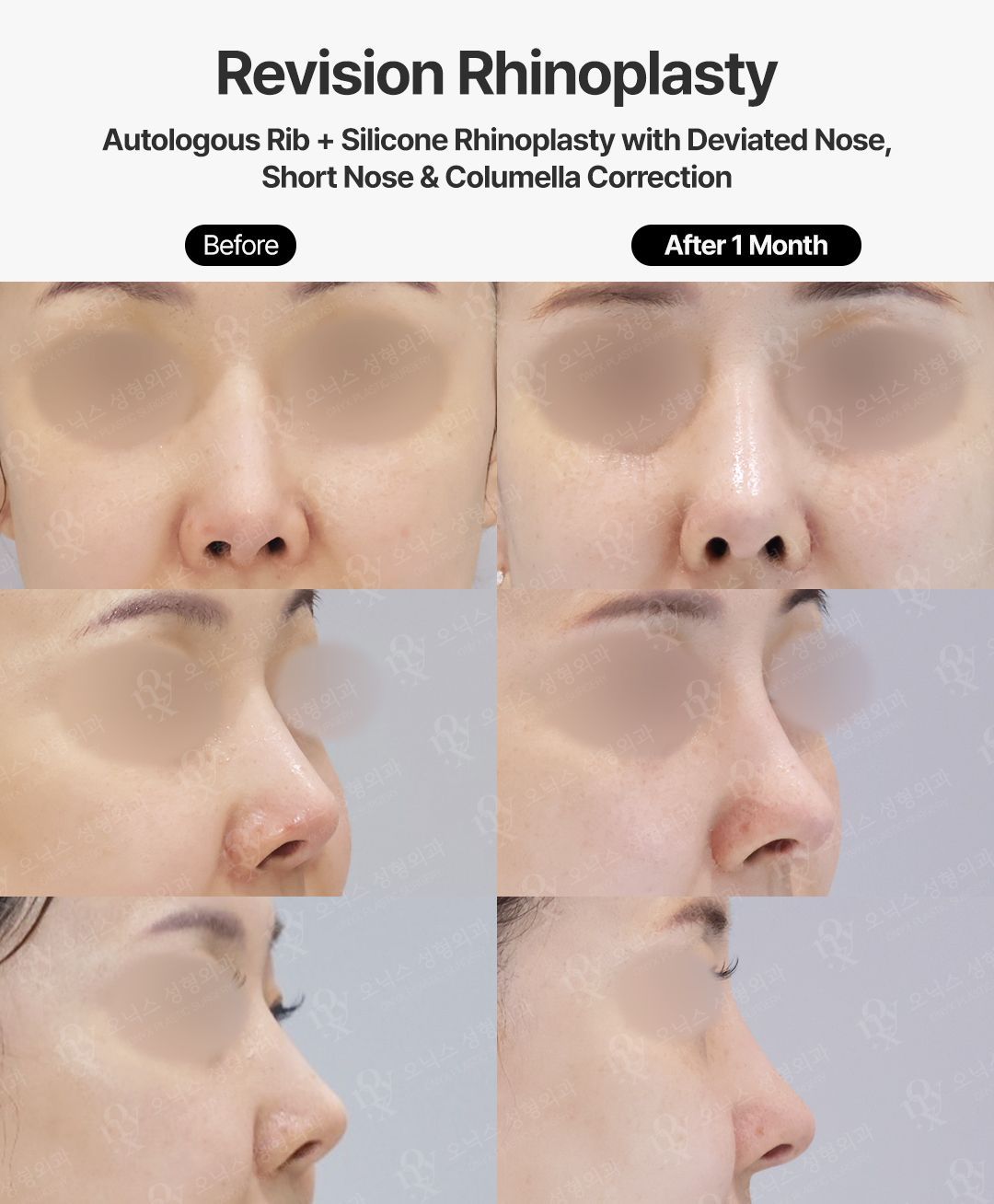
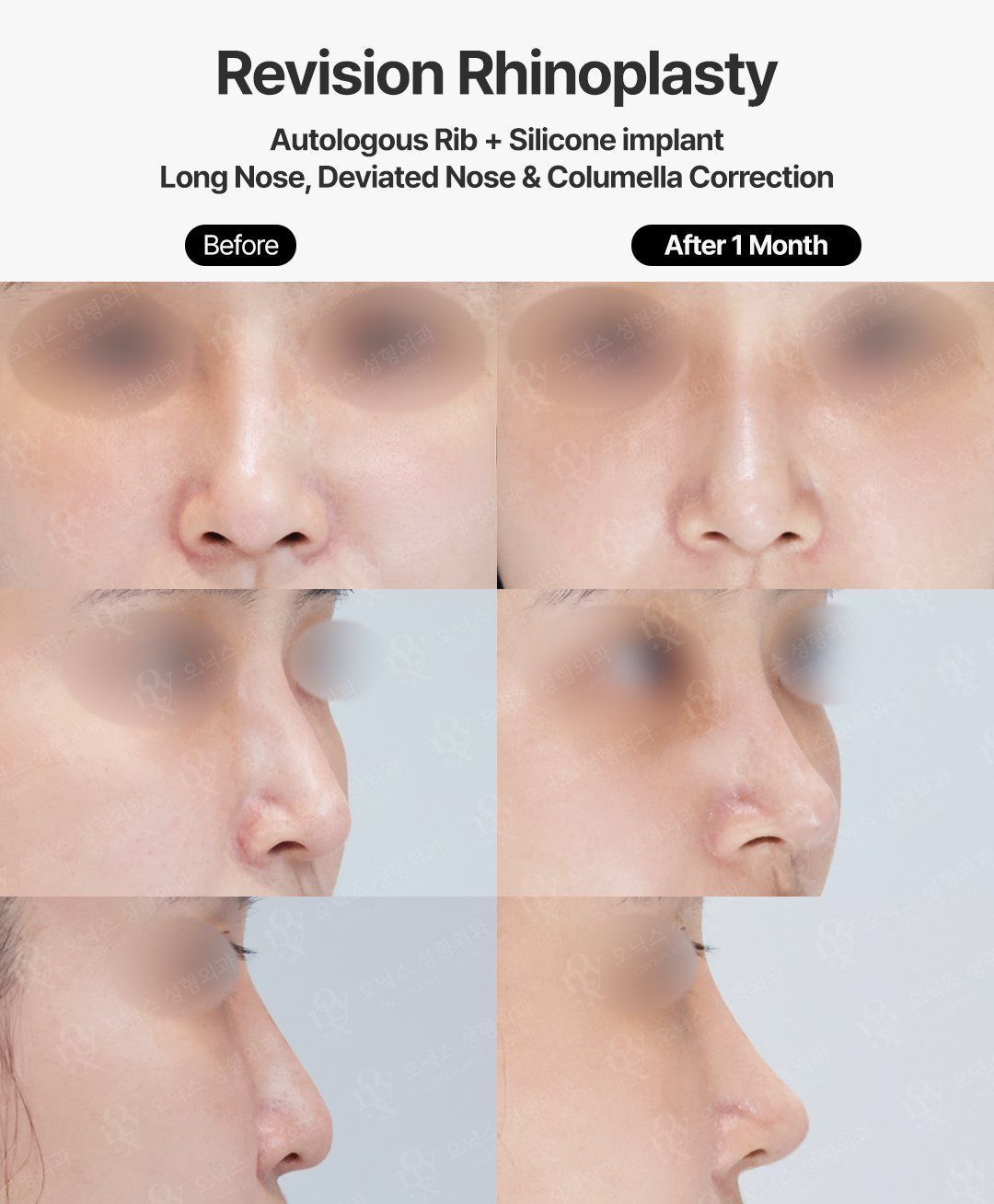
Long and deviated nose with columella correction
- Procedure
- Autologous rib + silicone implant revision with long nose, deviated nose and columella correction
- Concern
- Nose that looked long and drooping, deviated to one side, with an uneven columella
- Photo taken
- 1 month after surgery
- Views
- Front, oblique and profile
The central support was straightened and the tip rotated slightly upward, so the nose looks shorter and sits in the midline. The profile line from bridge to tip is now smooth.
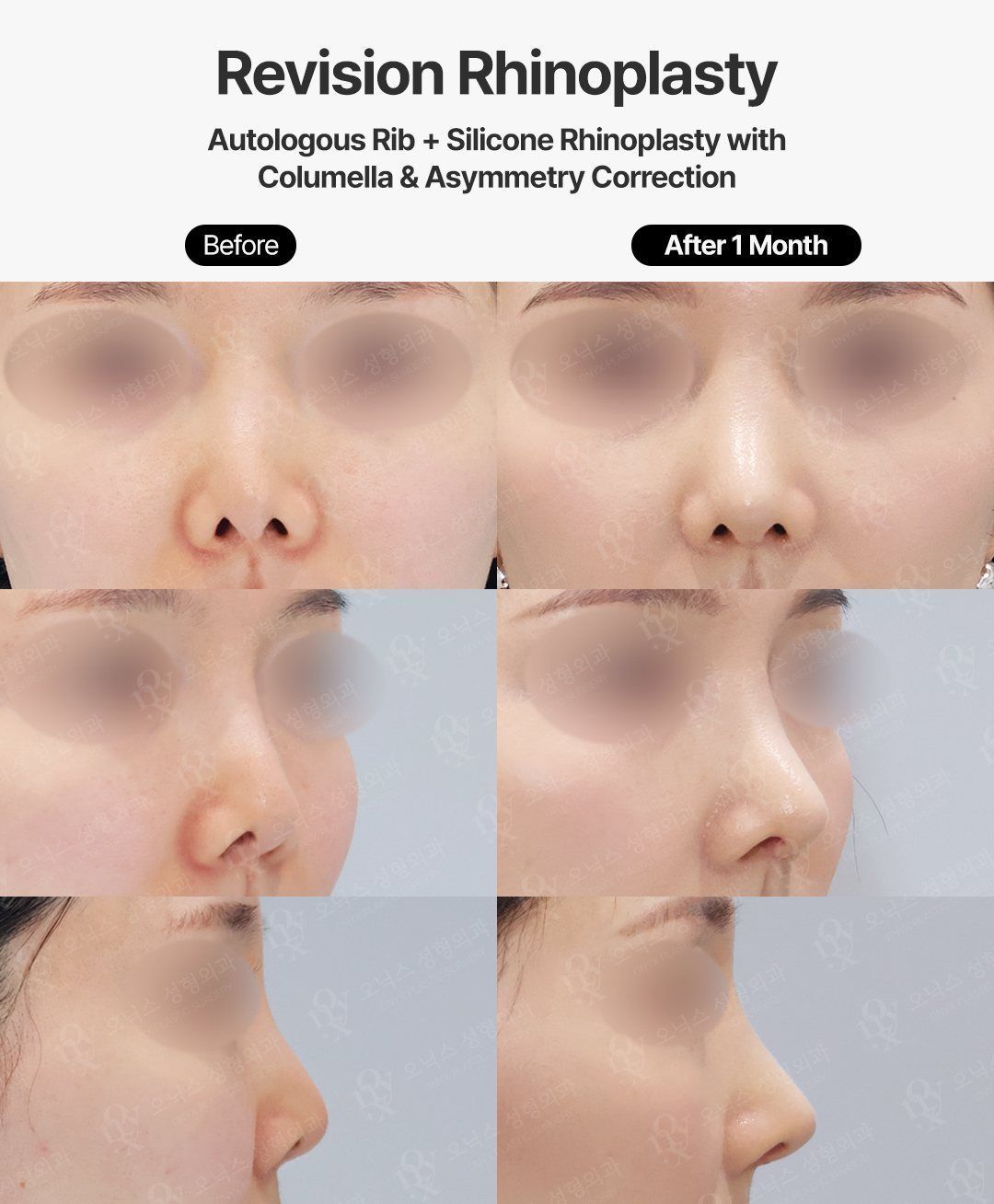
Case 03
Columella and asymmetry correction
- Procedure
- Autologous rib + silicone revision rhinoplasty with columella and asymmetry correction
- Concern
- Uneven nostrils and tip after a previous surgery, with weak columella support
- Photo taken
- 1 month after surgery
- Views
- Front, oblique and profile
Rebuilding the columella with rib cartilage evened out the tip and nostrils from the front. The bridge was refined to sit in balance with the new tip.
How to read these photos
- Same three views. Every case shows the front, oblique (three-quarter) and profile views, so you can judge the bridge, tip and columella from each angle.
- Timing is labelled. Each “after” photo states how long after surgery it was taken. At one to two months the nose is still settling, so the final shape is usually more refined.
- Privacy protected. Only the eyes are blurred, so you can see the whole nose clearly.
- Your result will differ. Skin thickness, cartilage strength and previous surgery all change what is possible for you.
Common reasons patients come for revision
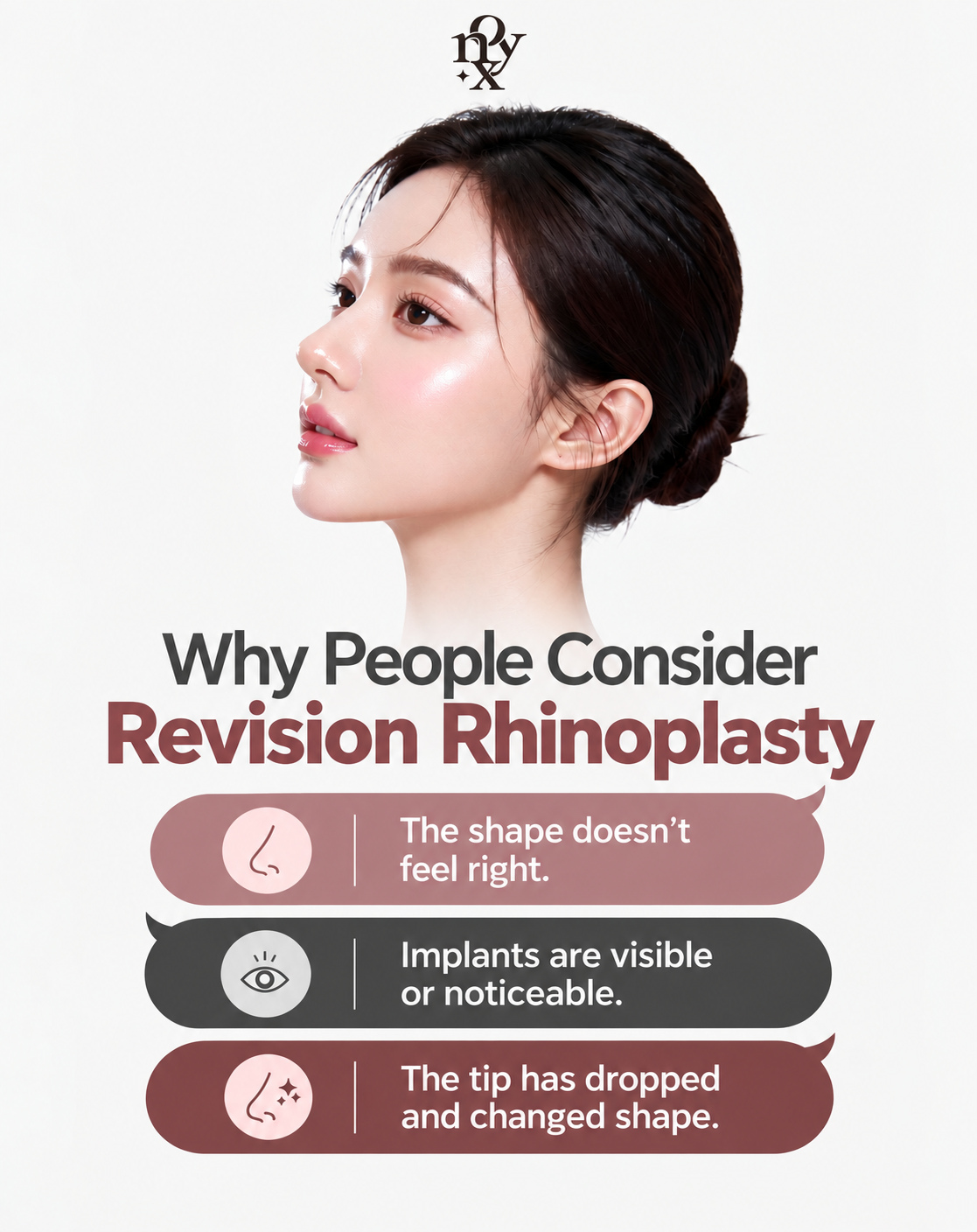
- A tip that has dropped, twisted or become pinched over time.
- A nose that has shortened or turned up because of scar contracture.
- An implant that is visible, has shifted or looks shiny.
- A crooked or asymmetrical result.
- Breathing that became worse after the first surgery.
How results change after revision rhinoplasty
| Time after surgery | What you usually see |
|---|---|
| Day 1–7 | Splint on; swelling and bruising are often more than after a first surgery. |
| Week 1–2 | Splint and stitches removed; the nose feels firm. |
| Month 1–2 | Shape and length are visible; the tip is still swollen (the stage shown on this page). |
| Month 3–6 | The nose looks natural to other people. |
| Month 12+ | Swelling in scarred or thick skin keeps settling; this is the final result. |
Typical timeline only. Healing varies with skin thickness, the grafts used and whether the nose has had surgery before.
Revision rhinoplasty before and after: common questions
Are these revision rhinoplasty photos real?
Yes. Every photo is of a real ONYX patient who had nose surgery before, shown from the same three angles before and after revision. Only the eyes are blurred for privacy.
How soon after my first surgery can I have revision rhinoplasty?
Usually 6 to 12 months after the previous surgery, once swelling and scar tissue have settled. An infection, an implant pushing through the skin or severe redness needs assessment sooner.
Why is rib cartilage used in most revision cases?
Previous surgery often uses up septal cartilage and leaves scar tissue that pulls the tip. Rib cartilage is strong and plentiful, so it can rebuild the septum and tip support and hold the new shape against that pull.
Is revision rhinoplasty recovery longer than a first rhinoplasty?
Usually, yes. Scarred tissue swells more and for longer, so the nose can feel firm for several months and the final result may take 12 months or more.
How long should I stay in Seoul for revision rhinoplasty?
Plan for about 10 to 14 days. That allows for the consultation, surgery, splint and stitch removal, and a check-up before you fly home.
Can you review my nose before I travel to Korea?
Yes. Send front, oblique and side photos and any details of your previous surgery on WhatsApp. Dr. Yoo reviews them and replies with a preliminary assessment.
Related pages
Want to know what is possible for your nose?
Send a front, oblique and side photo on WhatsApp. Dr. Yoo reviews them and replies with a preliminary assessment before you book a flight.
ONYX Plastic Surgery Clinic · 8F, 18 Gangnam-daero 94-gil, Gangnam-gu, Seoul, Korea. This page is for general information and does not replace an in-person medical consultation. Every surgery carries risks, including bleeding, infection, asymmetry and the possible need for further surgery. Results vary between individuals.