Non-Surgical Nose Lift Korea: Fillers, Threads, and More
Not everyone wants surgery to enhance their nose shape. In Korea — the global leader in subtle, natural-looking facial aesthetics — non-surgical nose lifts have become incredibly popular. Using fillers, threads, and advanced minimally invasive techniques, Korean clinics can create a straighter, more defined, and more lifted nose without downtime or permanent commitment.
Whether you want a higher bridge, a sharper tip, or gentle contouring, non-surgical rhinoplasty offers a fast, reversible, and affordable way to enhance your nose.
What Is a Non-Surgical Nose Lift?
A non-surgical nose lift uses injectable fillers, lifting threads, or energy-based techniques to reshape the nose without incisions.
It's ideal for people who want:
- A more defined nasal bridge
- A lifted or refined tip
- Smoother contours
- Quick results with minimal recovery
- A temporary solution before deciding on surgery
Korea specializes in natural, sophisticated enhancements that blend seamlessly with your facial features.
1. Nose Fillers (Hyaluronic Acid)
Fillers are the most common non-surgical method in Korea.
What Fillers Can Improve
- Low or flat bridge
- Minor dorsal irregularities
- Slight asymmetry
- Tip definition
- Smoother nose profile
Benefits
- Instant results
- Fully reversible
- Minimal downtime
- Natural contouring
- Customizable volume
Limitations
- Cannot make the nose smaller
- Temporary (6–12 months)
- Not suitable for severe deviations or short nose correction
Korean clinics often use micro-droplet techniques to ensure a refined, lifted look with no heaviness.
2. Nose Threads (PDO, PCL)
Thread lifting uses ultra-thin dissolvable threads to lift and support the nasal structure.
What Threads Can Improve
- Slightly drooping tip
- Low bridge height
- Mild asymmetry
- Tip projection
Benefits
- Creates structural lift
- Long-lasting (12–18 months)
- No incisions
- Strong tip definition
Limitations
- Results depend heavily on technique
- Not suitable for severe corrections
- May require combination with fillers for best results
Korean thread techniques are globally known for precision and natural-looking structure.
3. Hybrid Nose Lift (Threads + Fillers)
Many clinics combine both for optimal results.
Who This Is Best For
- Patients wanting both height and structure
- Those needing tip projection plus bridge smoothing
- People seeking long-lasting yet non-surgical results
This combination offers the most versatility among non-surgical options.
4. Botox for Nose Lift (Subtle Effects)
Botox can be used to relax muscles that pull the tip downward.
Best For
- Drooping nasal tip when smiling
- Slight downward rotation
- Increasing tip refinement
Results last 3–4 months and are often paired with fillers.
5. Energy-Based Nose Tightening (Less Common)
Some Korean clinics use RF or laser devices to tighten skin around the tip and alar area.
Best For
- Better definition
- Mild tip refinement
- Skin tightening
These methods are subtle and usually supplemental to fillers or threads.
Who Is a Good Candidate for Non-Surgical Nose Lift?
You may be ideal if you want:
- A higher, straighter bridge
- A more refined tip
- Minimal downtime
- Temporary improvements
- A preview of surgical results
- A natural, subtle enhancement
Non-surgical options work best for mild to moderate aesthetic concerns — not for structural or functional issues.
Who Is Not a Good Candidate?
Non-surgical nose lifts cannot correct:
- Severe crooked noses
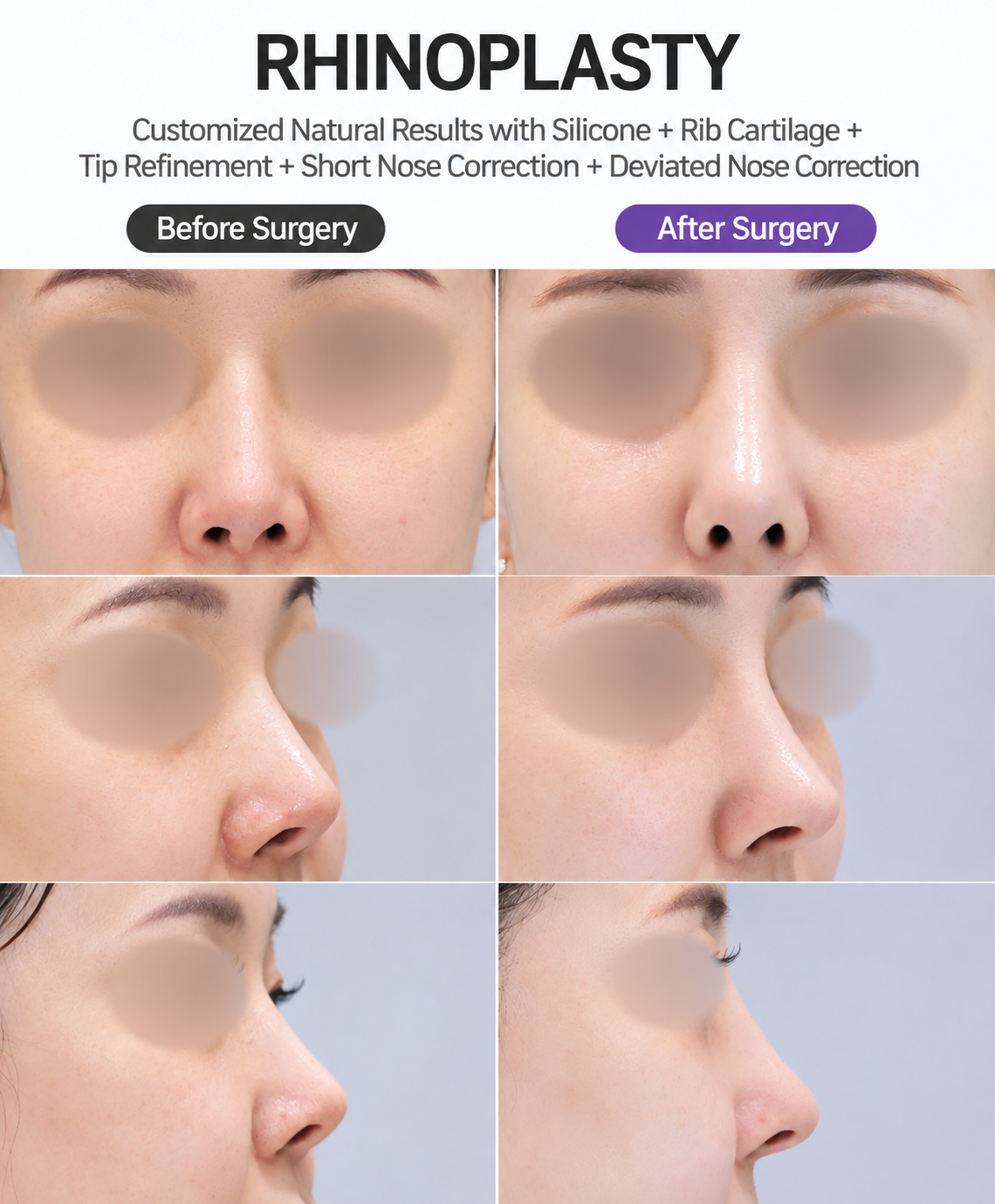
- Short or upturned noses
- Contracted noses
- Nose deformities after failed surgery
- Large dorsal humps
- Airway obstruction
For these conditions, surgical or structural rhinoplasty is required.
How Long Do Results Last?
- Fillers: 6–12 months
- PDO threads: 9–12 months
- PCL threads: 12–18 months
- Botox: 3–4 months
Most patients return annually for maintenance.
Risks to Consider
Although non-surgical, filler-based nose lifts require an experienced injector. Risks include:
- Vascular occlusion (rare but serious)
- Swelling or bruising
- Asymmetry
- Uneven volume
- Tip heaviness if too much filler is used
Korea is known for high-precision injection techniques that minimize these risks.
Why Korea Is the Best for Non-Surgical Nose Lifts
✔ Natural, subtle aesthetic philosophy
✔ High-volume clinics and experienced injectors
✔ Micro-droplet HA filler techniques
✔ Advanced thread lifting protocols
✔ Customized treatment plans
✔ Fast, minimal-downtime procedures ideal for travelers
Korean injectors specialize in refined, elegant enhancements rather than overly dramatic changes.
Cost Expectations in Korea (General Overview)
(No table, no references — just simple descriptions.)
- Fillers: Usually mid-range pricing depending on brand and amount
- Threads: Higher cost due to material + technique
- Hybrid treatments: Combination pricing
- Botox: Typically affordable
Non-surgical options cost far less than surgical rhinoplasty and have no recovery break.
Final Thoughts
A non-surgical nose lift is one of the fastest, most convenient ways to enhance your appearance in Korea. Whether you choose fillers, threads, or a hybrid method, the results can be dramatic yet natural — without surgery, without scars, and with virtually no downtime.
For those seeking a preview of surgical results or a soft, refined enhancement, Korea’s non-surgical rhinoplasty techniques deliver some of the most precise and artistic outcomes in the world.