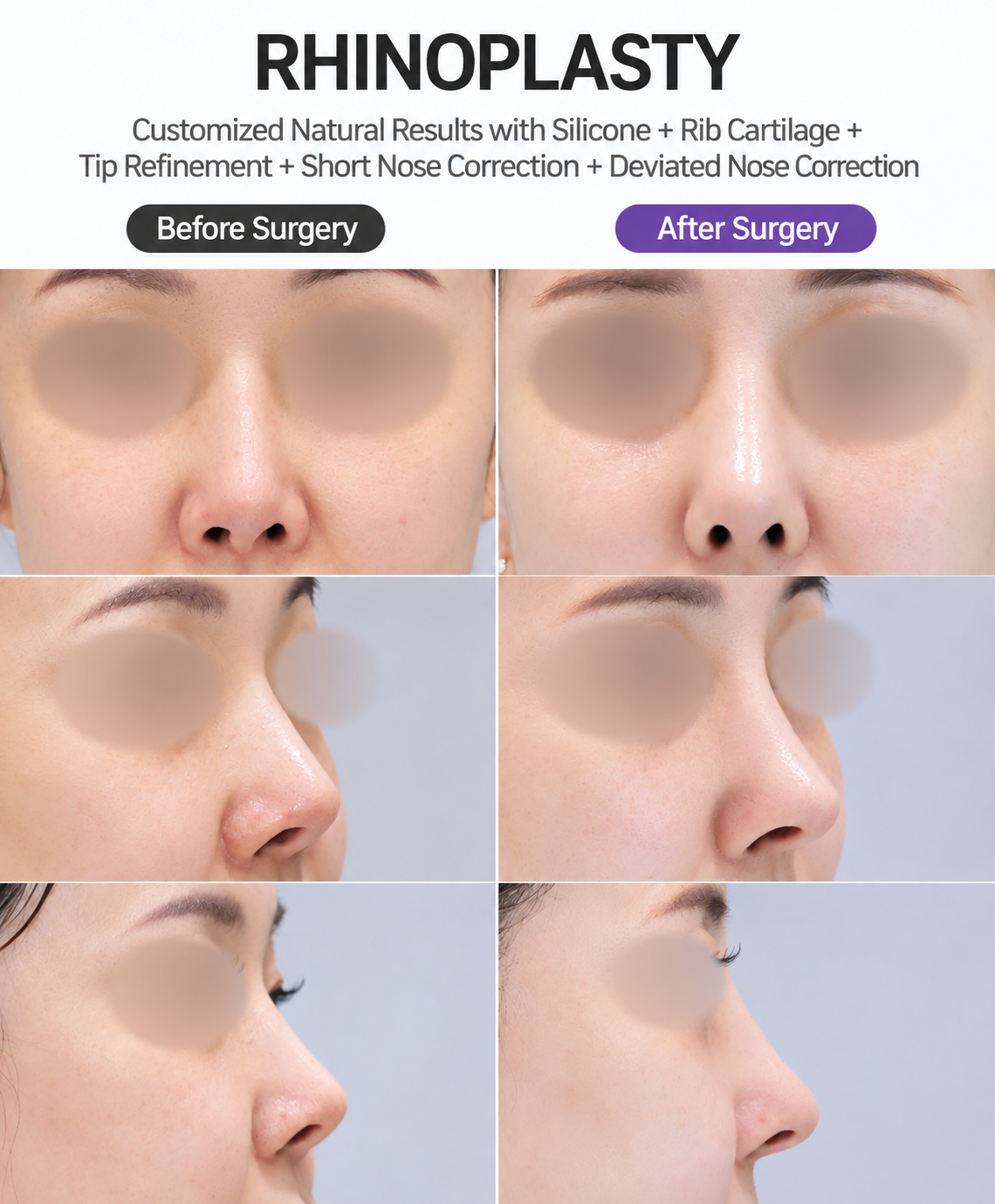
Skin Treatments After Rhinoplasty: What to Wait For and What's Safe
Many of our international patients have another plan for their time in Seoul besides rhinoplasty: they also want to try the Korean skin clinics they have read so much about. It is a reasonable idea. You are already here, the clinics are excellent, and the prices are often lower than at home. But the nose is still healing, and some skin treatments can affect a fresh result. This guide covers what usually needs to wait, what is generally fine, and how to plan the two around each other.
Everything below is general guidance. Your surgeon's instructions for your own case always come first, so show them your plans at your one-week check.
1. The first week: let the nose rest
For the first week the splint is on, the tissues are swollen, and the incisions are still closing. This is not the time for any facial treatment. Steam, heat, pressure on the face and anything that raises blood flow to the area can make swelling and bruising worse. Gentle cleansing around the splint and sunscreen are all your skin needs for now. Our post-op care checklist goes through each day of that week.
2. Weeks two to four: gentle care, away from the nose
Once the splint and stitches are out, most patients can go back to their usual skincare routine. Treatments that stay well away from the nose and don't put pressure on the face, such as a hydrating facial that skips the central face, are usually fine during this stage. Ask the person treating you to avoid pressing, massaging or putting devices on the nose and cheeks next to it.
Hold off for now on anything that heats the skin deeply, any face-down massage, and pressure-based lifting devices on the mid-face. The nasal tip in particular stays swollen for months, as we explain in our guide to swelling after a nose job, and it can be sensitive to heat and pressure.
3. Lasers, lifting devices and injectables
Energy-based treatments such as HIFU, RF lifting and stronger lasers usually wait at least several weeks, and longer if they would be applied near the nose. Botox elsewhere on the face, for example the forehead or jaw, is often possible sooner, but always check with your surgeon first. Filler on or near the nose should not be done by anyone else while the result is still settling. If you feel you need a touch-up, talk to your surgeon before anyone injects.
4. Choosing a skin clinic that works around your surgery
If you are staying in central Seoul, you may find it easier to book skin care near your hotel than to travel back to Gangnam. Myeongdong is where many visitors stay, and it has several clinics used to treating foreign patients. If you are looking there, this guide to English-speaking skin clinics in Myeongdong is a helpful place to start. Whichever clinic you choose, tell them the date of your rhinoplasty and show them your aftercare sheet. A good clinic will change its plan or ask you to come back later rather than treat too early.
5. A simple plan for a 10–14 day trip
- Days 1–3: consultation, CT and surgery. No skin treatments.
- Days 4–7: rest, sunscreen, gentle cleansing only.
- Days 7–9: splint and suture removal. Ask your surgeon which treatments are fine and when.
- Days 10–14: light, non-pressure skin care if you have been cleared. Save lasers and lifting for a later visit.
If you are short on time, it usually makes sense to book the stronger skin treatments for your next trip to Korea, when your nose is fully healed. Before you fly home, read our notes on flying after rhinoplasty.
Conclusion
You can combine rhinoplasty with Korean skin care. You just have to get the order right: the nose heals first, gentle care comes next, and stronger treatments wait until your surgeon clears you. If you want to plan both before you arrive, send us your dates on WhatsApp and we will help you put together a schedule that keeps your result safe.