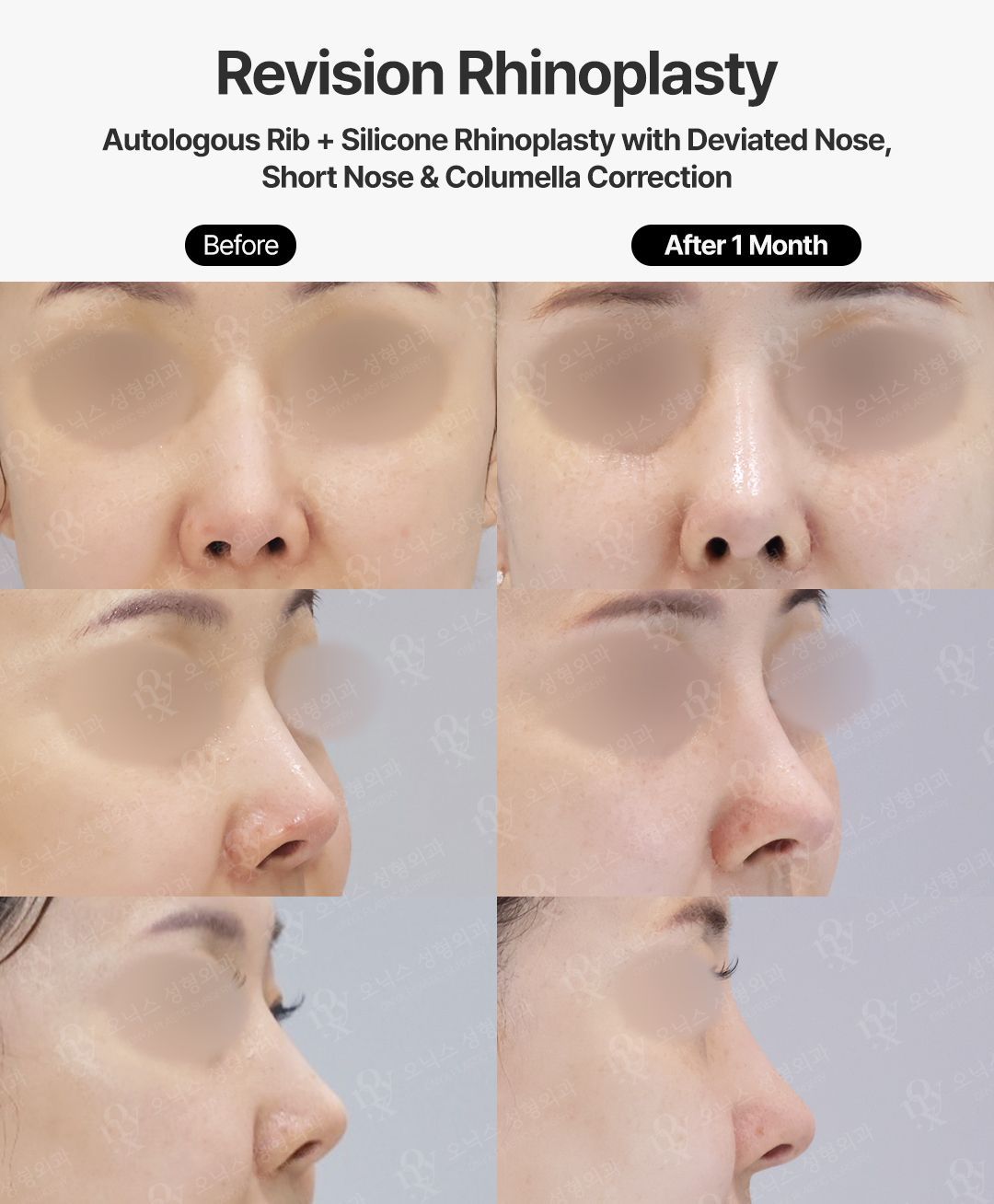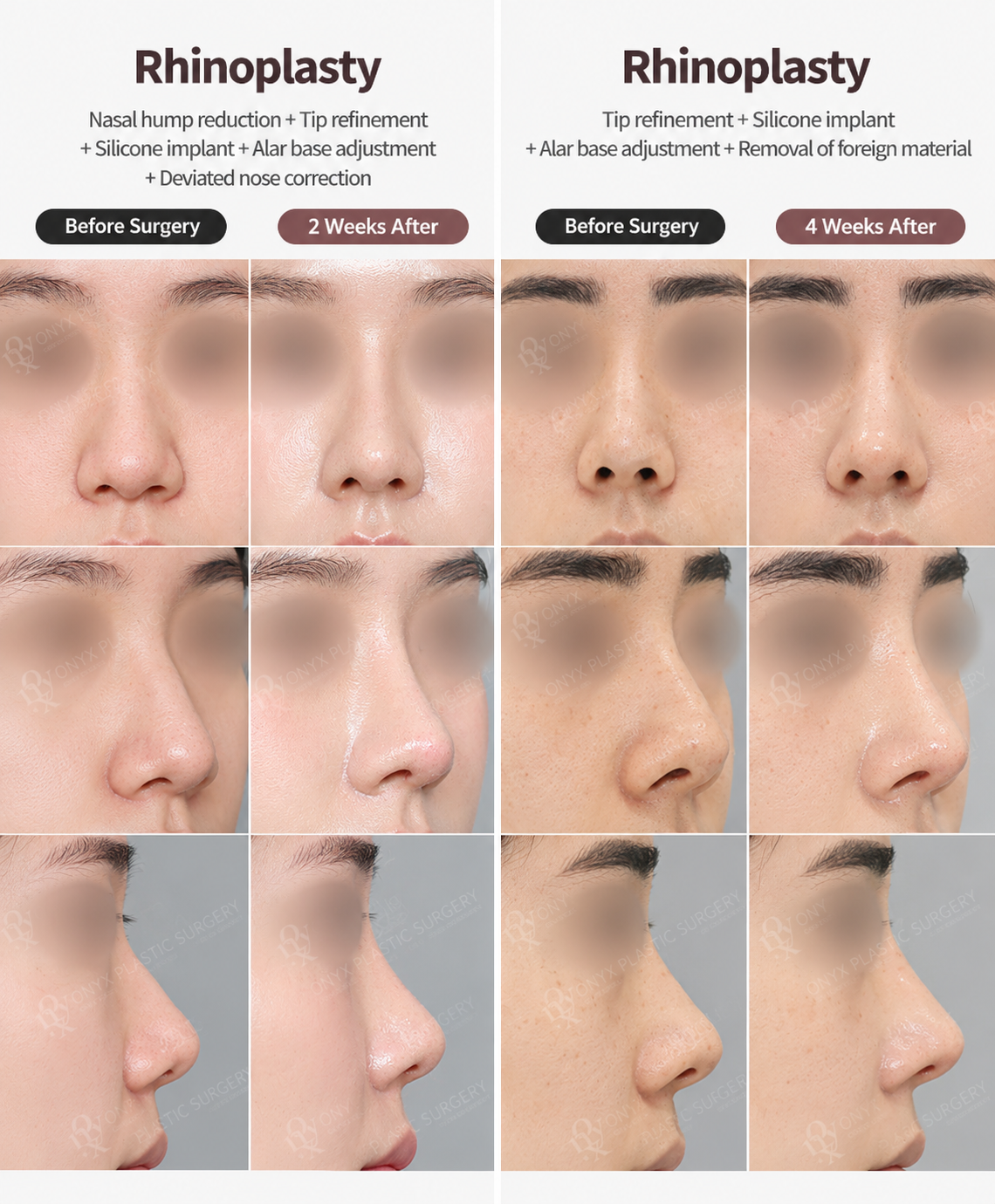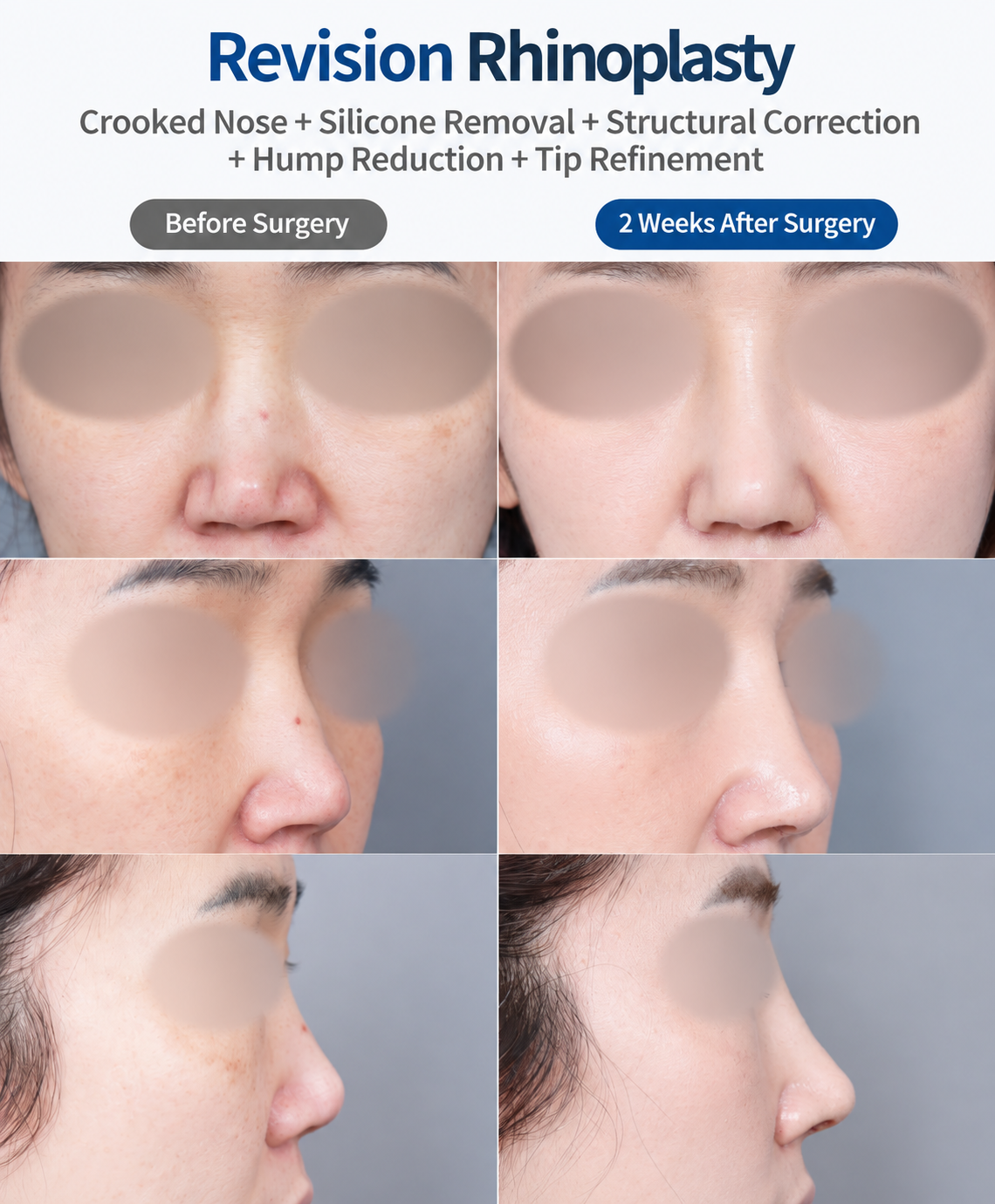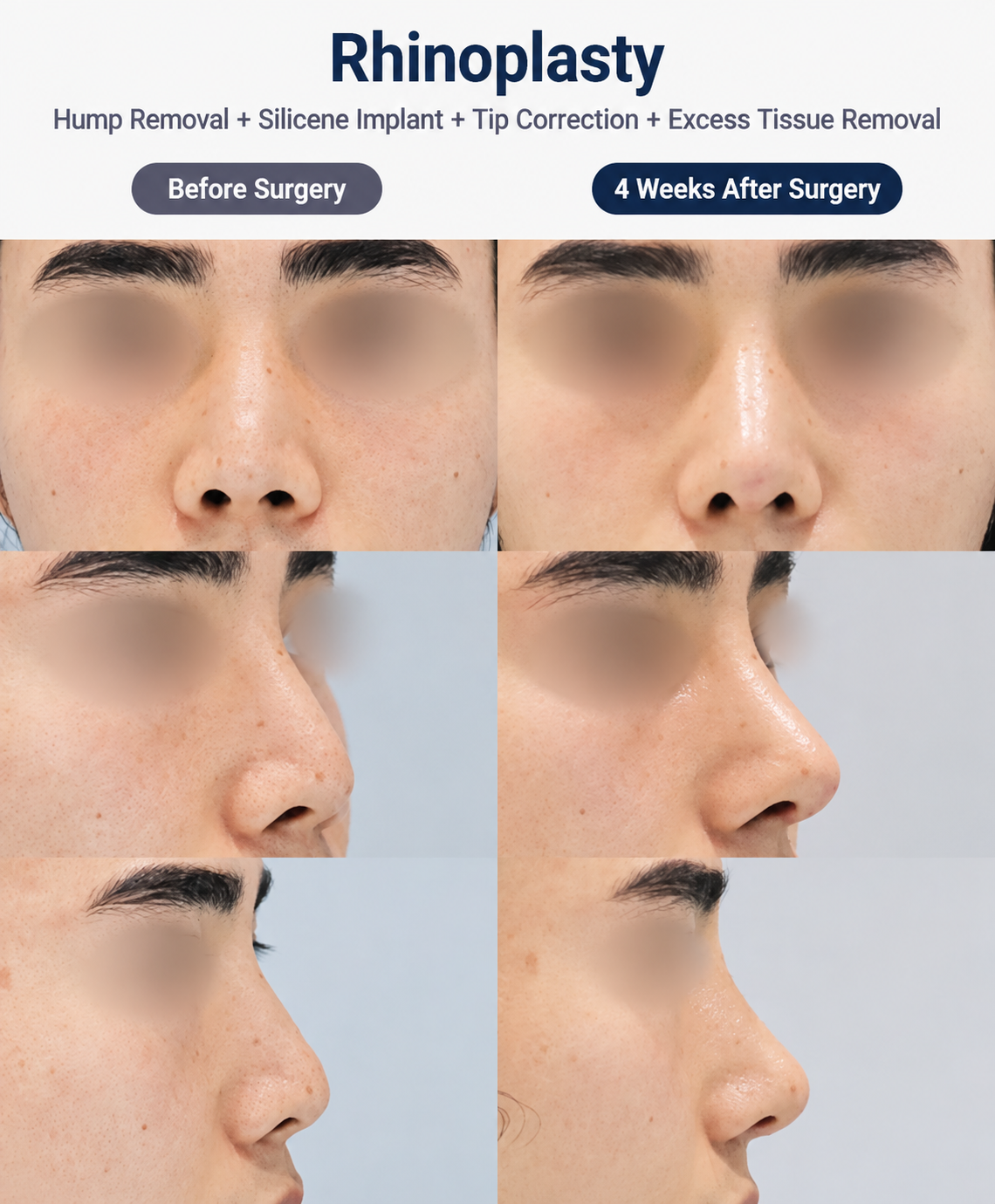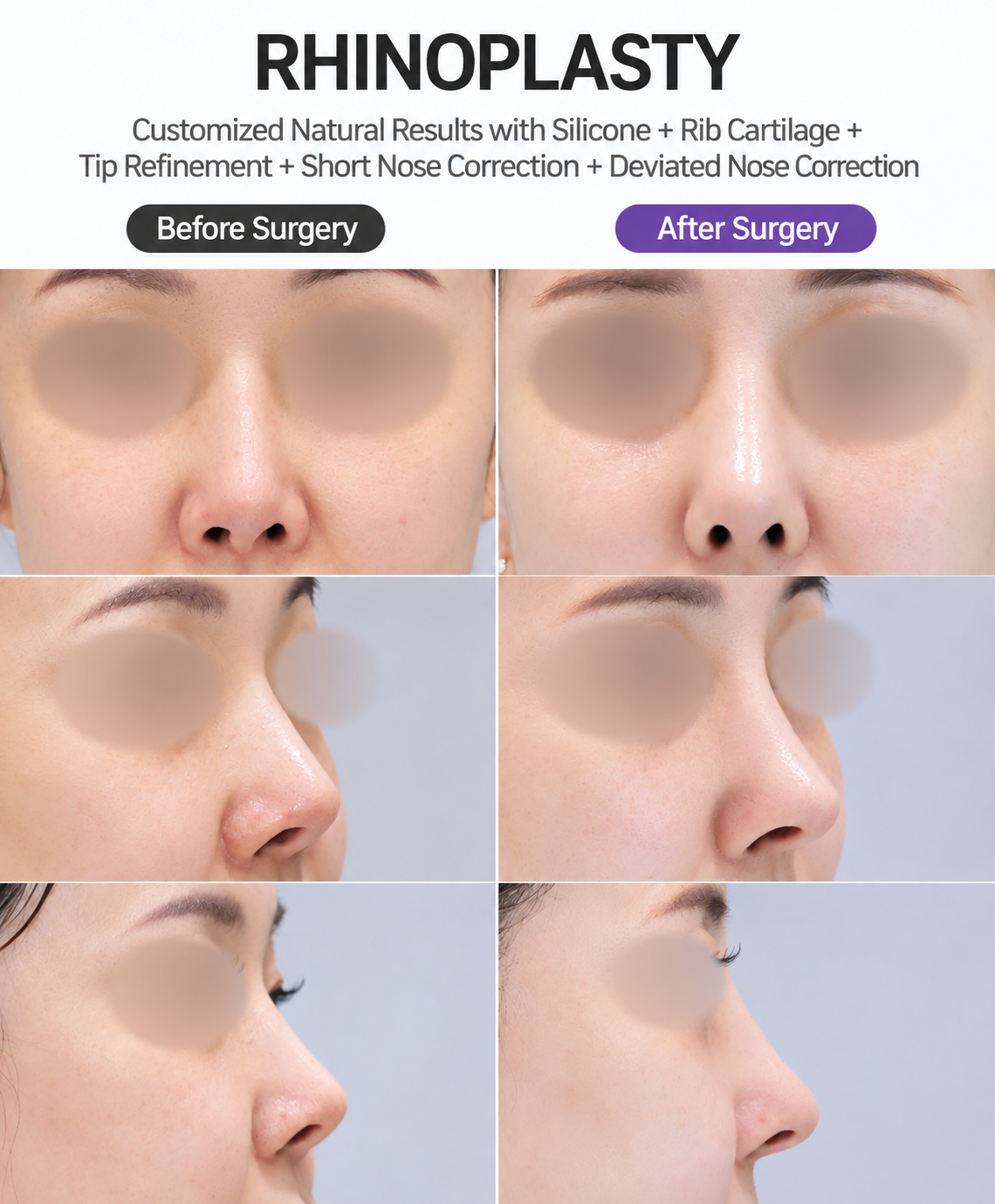
Contracture Nose Correction in Korea
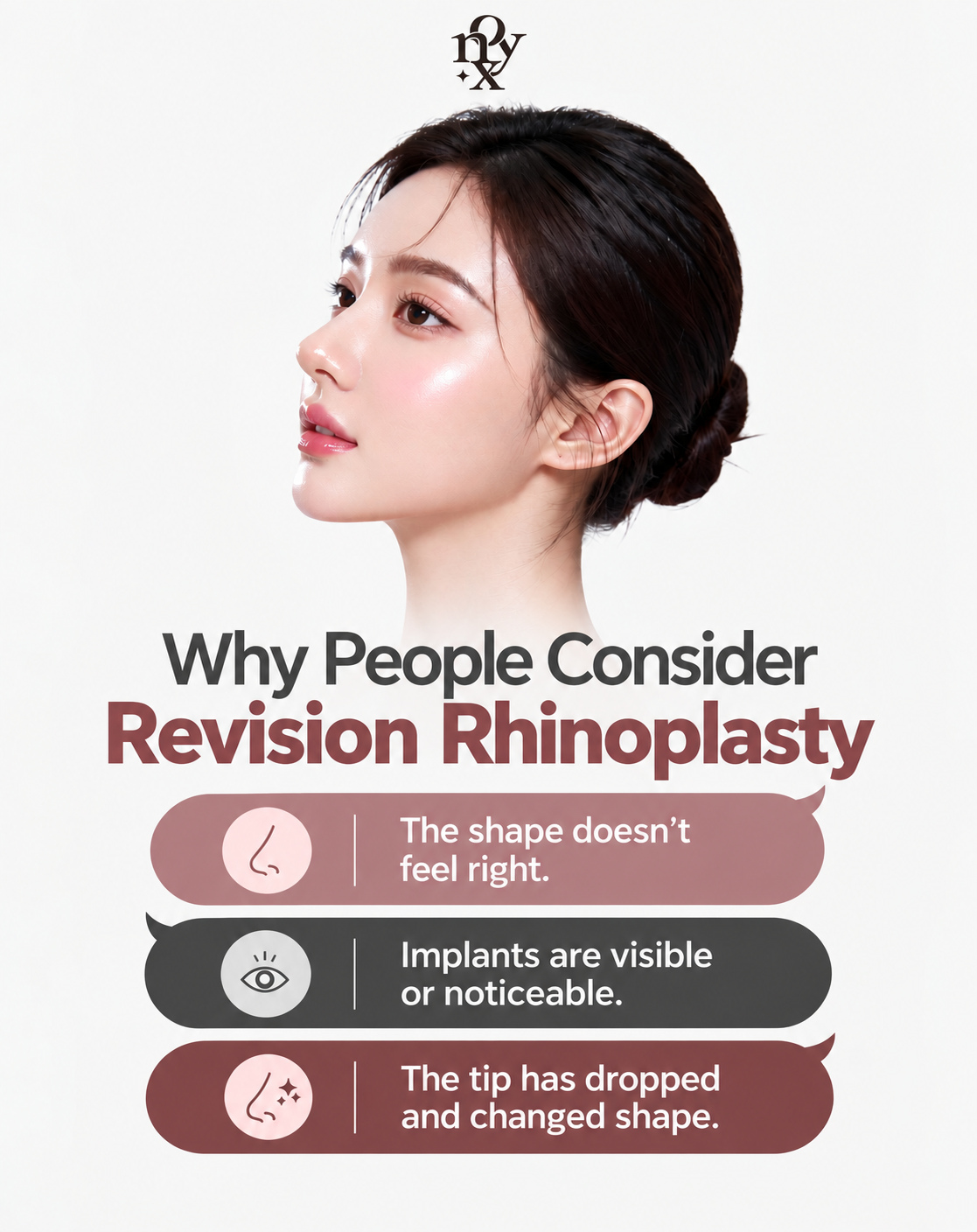
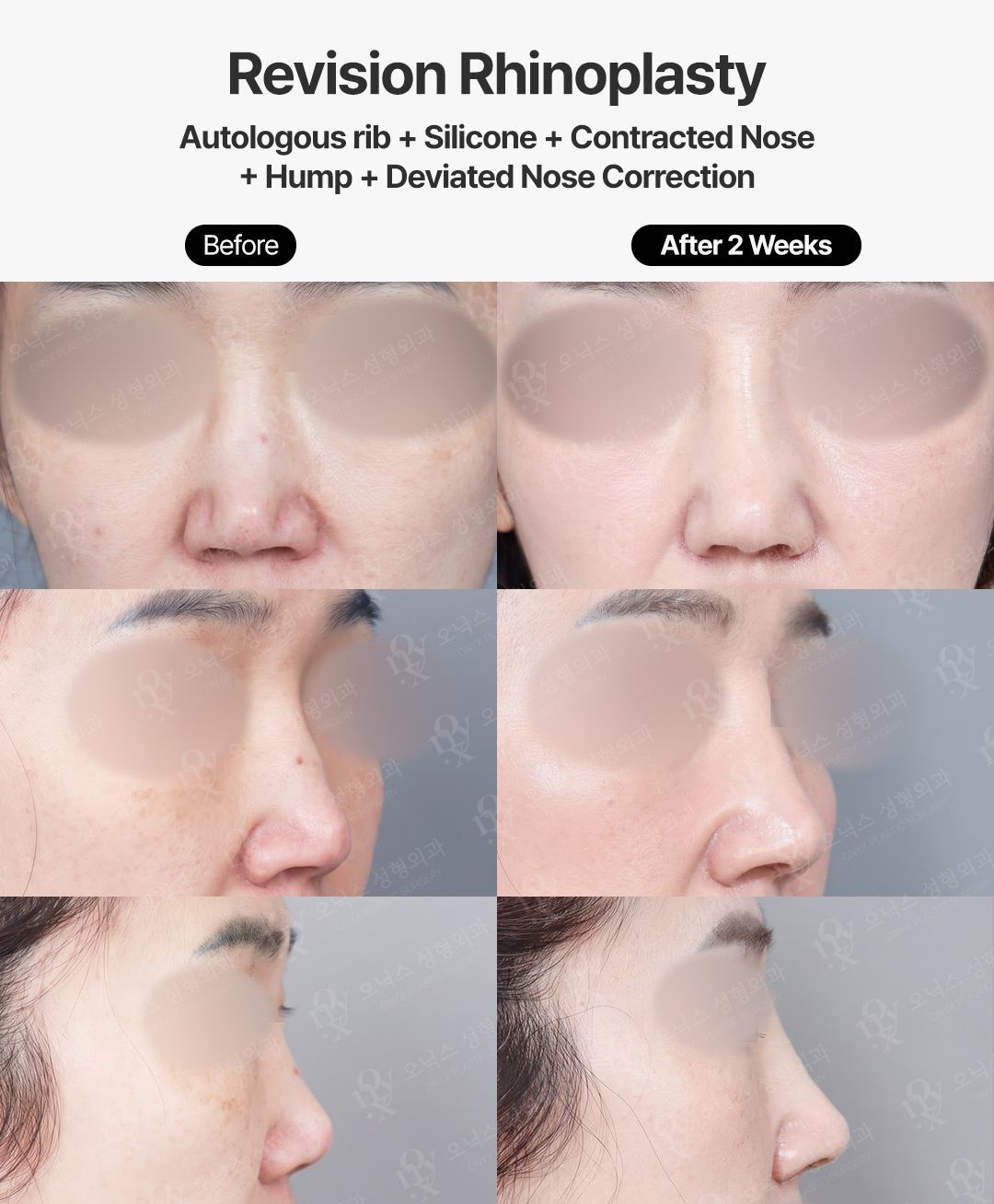
A contracture nose is one of the most challenging complications following rhinoplasty, most commonly associated with implant-based nose surgery. It occurs when scar tissue tightens around the nasal framework, leading to distortion, stiffness, and an unnatural appearance.
Korea is widely regarded as a leading destination for contracture nose correction due to extensive experience with implant revisions and advanced structural rhinoplasty techniques.
What Is a Contracture Nose?
A contracture nose develops when excessive scar tissue (capsular contracture) forms around the nasal implant or internal structures, gradually pulling the nose upward, inward, or downward.
Common features include:
- Shortened or upturned nose over time
- Hard or stiff nasal tip
- Distorted nostrils
- Tight, unnatural appearance
- Visible implant outline or deviation
- Progressive worsening months or years after surgery
Contracture is not an immediate complication—it usually develops gradually.
What Causes Nasal Contracture?
The most common causes include:
1. Long-Term Implant Reaction
The body forms a capsule around implants. In some cases, this capsule tightens excessively, pulling nasal structures out of position.
2. Over-Aggressive Augmentation
Excessive implant height or pressure on the nasal tip increases the risk of:
- Poor blood supply
- Tissue irritation
- Scar overreaction
3. Inadequate Tip Support
When the nasal tip is not properly supported with cartilage, implant pressure transfers directly to soft tissue, increasing contracture risk.
4. Infection or Inflammation
Even low-grade or past infections can trigger abnormal scar formation.
5. Multiple Previous Rhinoplasties
Repeated surgery increases scar tissue and reduces tissue flexibility.
Can Contracture Nose Be Corrected?
Yes—but contracture nose correction requires complex revision rhinoplasty. Simple implant replacement is usually insufficient.
Successful correction involves:
- Removing the implant
- Releasing scar tissue
- Rebuilding the nasal framework
This is why surgeon experience is critical.
How Contracture Nose Is Corrected in Korea
1. Complete Implant Removal
The first step is safe removal of the implant and surrounding scar capsule. Partial removal often leads to recurrence.
2. Scar Tissue Release (Capsulectomy)
Surgeons carefully release:
- Fibrotic scar bands
- Contracted capsule tissue
This restores mobility and prepares the nose for reconstruction.
3. Structural Reconstruction With Cartilage
Correction almost always requires autologous cartilage:
- Septal cartilage (if available)
- Ear cartilage (for tip reshaping)
- Rib cartilage (most common in severe contracture cases)
Cartilage is used to:
- Rebuild nasal length
- Restore projection
- Reinforce tip support
- Prevent re-contracture
4. Tip Lengthening and Support
Contracture often shortens the nose. Korean surgeons focus on:
- Tip extension grafts
- Strong internal support
- Balanced projection
This step is crucial for long-term stability.
5. Skin and Soft Tissue Management
Because skin may be tight or compromised:
- Overcorrection is avoided
- Healing is planned conservatively
- Gradual improvement is expected
Why Korea Is Known for Contracture Nose Correction
Korea’s reputation comes from:
- High volume of implant revision cases
- Advanced rib cartilage rhinoplasty expertise
- Conservative, structure-focused philosophy
- Experience correcting severe deformities
Many patients worldwide seek Korean surgeons after failed implant rhinoplasty elsewhere.
Recovery After Contracture Nose Correction
Recovery is typically longer than primary rhinoplasty.
General expectations:
- Significant swelling initially
- Tip stiffness during early healing
- Gradual softening over 6–12 months
- Final results may take up to a year
Patience is essential—early results do not reflect the final outcome.
Who Is a Good Candidate?
Contracture nose correction may be appropriate if you:
- Have a hard, shortened, or distorted nose after rhinoplasty
- Notice progressive changes months or years after surgery
- Have had implant-based rhinoplasty
- Are willing to undergo complex revision surgery
Important Limitations to Understand
Contracture correction:
- Cannot always restore the original nose perfectly
- May require rib cartilage
- Has higher surgical complexity
- Requires realistic expectations
The goal is functional improvement and natural balance, not perfection.
Common Mistakes to Avoid
🚩 Replacing the implant without reconstruction
🚩 Choosing surgeons without revision experience
🚩 Expecting quick or dramatic correction
🚩 Ignoring long-term scar behavior
These often lead to repeat failure.
Final Thoughts
Contracture nose correction in Korea is a highly specialized revision procedure that requires advanced surgical skill, structural rebuilding, and long-term planning. While challenging, proper correction can significantly improve nasal shape, softness, and facial harmony.
The best outcomes come from:
- Complete scar release
- Strong cartilage-based reconstruction
- Conservative aesthetic goals
- An experienced revision rhinoplasty surgeon
For patients suffering from contracture nose, Korea offers one of the most refined and reliable approaches to correction worldwide.